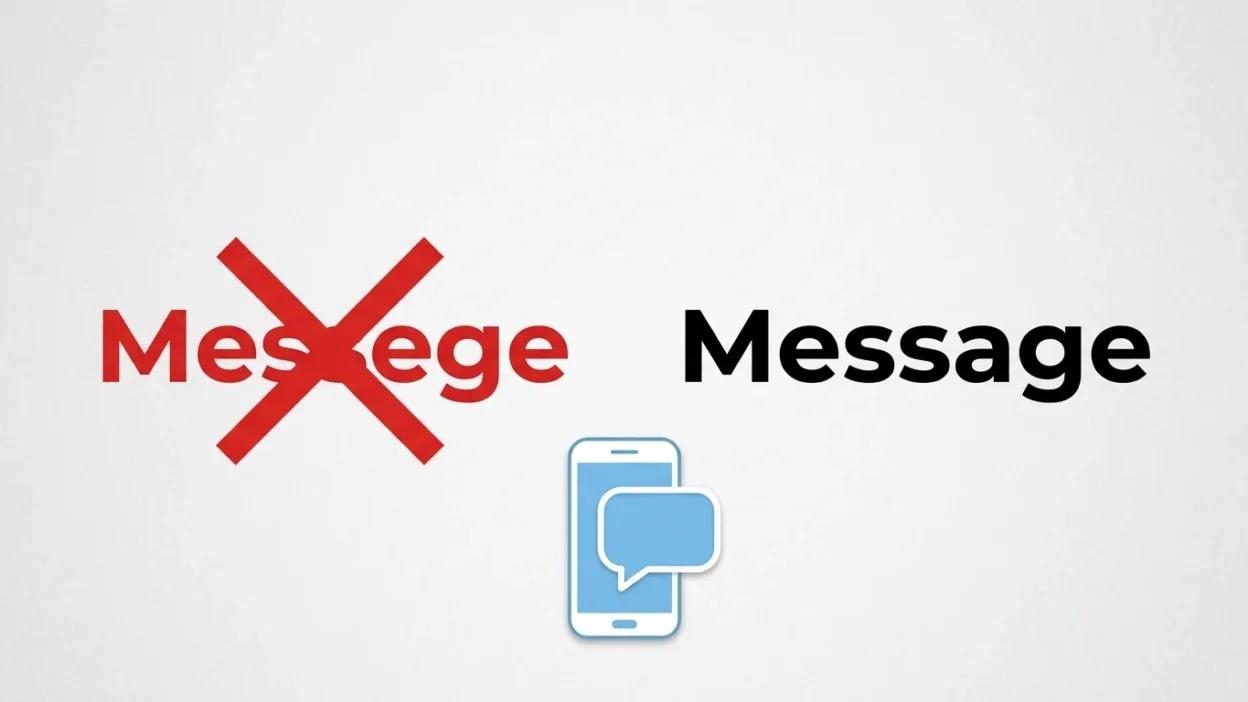
Have you ever typed “messege” when you meant “message”? This is a common spelling mistake because the two forms look very similar and both may seem like they could be pronounced the same way. However, there is an important difference: message is the correct standard English spelling, while messege is a misspelling.
The word message is used for a piece of information communicated to someone, whether through speech, writing, email, text, or another form of communication. It can also refer to the main idea or lesson that a speaker, writer, film, or work of art communicates.
Understanding the correct spelling is especially important in professional emails, text messages, business communication, academic writing, and online content. In this guide, we will explain the difference between messege vs message, show you how to use message correctly, cover common spelling mistakes, and provide simple examples and memory tricks.
Quick Answer
Message is the correct spelling. Messege is a common spelling error and is not standard English. Use message when referring to information sent or communicated to someone, such as a text, email, note, or important idea.
Why People Confuse It
The confusion between messege and message mainly comes from their similar appearance.
The incorrect spelling messege replaces the second a with e:
Incorrect: messege
Correct: message
The correct spelling contains age at the end:
mess + age = message
Because the vowel in the middle can be difficult to remember, people sometimes write messege instead.
Another reason for the confusion is pronunciation. In normal speech, the vowel sounds are not always obvious, so spelling the word from pronunciation can lead to mistakes.
First Word: Messege
Messege is incorrect.
It is a common misspelling of message and should not be used in standard English writing.
For example:
❌ I sent you a messege.
The correct version is:
✅ I sent you a message.
You may occasionally see messege in informal online writing, social media posts, or text messages, but its appearance does not make it a standard spelling.
Is “messege” ever correct?
No. Messege is not the standard spelling of the English word.
If you are writing an email, article, assignment, report, business communication, or professional message, always use message.
Second Word: Message
Message is the correct English spelling.
As a noun, message can mean information communicated from one person to another.
I received your message this morning.
It can also refer to the main idea or meaning communicated by something.
The book has an important message about kindness.
As a verb, message means to send someone a message, especially through a digital communication platform.
I will message you later.
Common meanings of message
Message can refer to:
• A text sent to someone
• An email or written communication
• A spoken communication
• A note
• A main idea or lesson
• A communication sent through an app or social media platform
Comparison Table
| Word | Correct? | Meaning | Example |
|---|---|---|---|
| Messege | No | Common misspelling | ❌ I sent a messege. |
| Message | Yes | Information communicated to someone | ✅ I sent a message. |
The key point is simple:
Message is correct. Messege is incorrect.
When to Use Each
Use “message” for written communication
She sent me a message this morning.
Use “message” for text messages
I got your message.
Use “message” for emails
Your message was clear and helpful.
Use “message” for an important idea
The film has a powerful message.
Use “message” as a verb
Please message me when you arrive.
I will message you the details.
In every standard usage, the correct spelling is message.
Examples of Message
- I received your message yesterday.
- Please leave a message after the tone.
- She sent me a message before the meeting.
- Did you read my message?
- I will message you when I get home.
- The teacher sent a message to the parents.
- His speech delivered a powerful message.
- The campaign has a clear message for its audience.
- Please check your messages before leaving.
- I sent a message to my manager.
- The movie communicates an important message about friendship.
- You can message me through the app.
Common Mistakes
Mistake 1: Writing “messege”
Incorrect:
I received your messege.
Correct:
I received your message.
Mistake 2: Confusing the vowel sequence
A useful way to remember the spelling is:
message
not:
messege
The ending is age, not ege.
Mistake 3: Using the incorrect spelling in professional writing
A typo such as messege may be overlooked in casual texting, but it can make professional writing look careless.
Always use message in:
• Emails
• Reports
• Applications
• Articles
• Assignments
• Business communication
• Formal documents
Mistake 4: Thinking “messege” is an alternative spelling
It is not a British or American spelling variation.
Message is the standard spelling in both varieties of English.
Memory Trick
Use this simple trick:
Message has “age” at the end.
Think:
mess + age = message
You can also remember:
A message can age, but “messege” is not a word.
The most practical memory rule is simply:
MESSAGE = MESS + AGE
American vs British English
Message is spelled the same way in American and British English.
There is no standard American spelling messege and no British spelling messege.
Both varieties use:
I sent you a message.
The word can function as both a noun and a verb in both forms of English.
Similar Words
Message vs note
A note is usually a short written communication.
She left me a note.
A message is broader and can be written, spoken, digital, or symbolic.
Message vs text
A text commonly refers to a message sent through a mobile phone.
I sent you a text.
A message has a broader meaning.
Message vs communication
Communication is the broader concept of exchanging information.
A message is a particular piece of information communicated.
Message vs memo
A memo is generally a formal written communication used within an organization.
A message can be formal or informal and can occur in many different contexts.
Final Verdict
Message is the correct spelling, while messege is a misspelling.
Use message when talking about information sent or communicated to someone, a text or email, or the main idea of a speech, book, film, or other work.
The easiest way to remember the spelling is:
MESSAGE = MESS + AGE
If you are wondering whether to write messege or message, always choose message.
Frequently Asked Questions
Is “messege” a correct spelling?
No. Messege is a common misspelling. The correct spelling is message.
Is it “message” or “messege”?
It is message. The correct word contains age near the end.
How do you spell message correctly?
The correct spelling is M E S S A G E.
Why do people spell message as messege?
People often make this mistake because the word’s pronunciation can make the vowel sequence difficult to remember. The incorrect messege is therefore a common spelling error.
Is message the same in American and British English?
Yes. Message has the same spelling and basic meaning in both American and British English.
Can message be used as a verb?
Yes. Message can be a verb meaning to send someone a message.
I will message you later.
What is the easiest way to remember the spelling of message?
Remember:
MESS + AGE = MESSAGE
The ending is age, not ege.
Conclusion
The difference between messege vs message is straightforward because only one of them is a standard English word. Message is the correct spelling, while messege is simply a common spelling mistake. Whether you are talking about a text, email, note, communication, or the main idea of something, message is the form you should use.
If you often confuse the spelling, remember the simple pattern mess + age = message. This trick can help you avoid the incorrect messege spelling in everyday writing as well as professional and academic communication.
Remember This
Message = correct
Messege = incorrect
Memory trick: MESS + AGE = MESSAGE

Daniel Charles is a dedicated author and dream interpretation enthusiast at DrameyHut. He specializes in analyzing dream symbols and meanings, offering clear and insightful content for readers. His work aims to help individuals understand their subconscious thoughts, gain clarity, and explore the deeper messages hidden within their dreams.