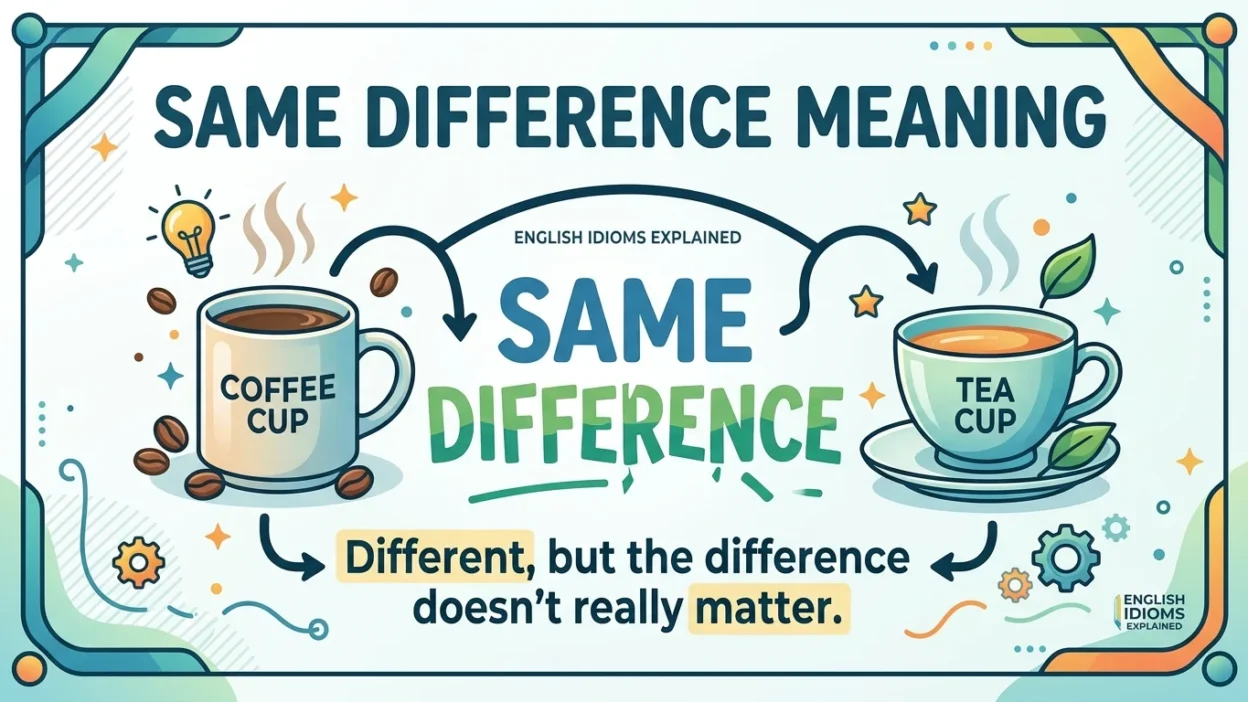
“Same difference” is a humorous and often sarcastic English expression used when two things are technically different but the difference between them does not matter much.
It is a playful contradiction because same means “identical,” while difference means “not the same.” Together, the phrase intentionally creates a contradiction to suggest that the distinction is unimportant or practically irrelevant.
Quick Answer
“Same difference” means “it makes no meaningful difference” or “the distinction doesn’t really matter.”
“Do you want to take the bus or the train?”
“Either one. Same difference.”
Here, the speaker means:
“Either choice is fine. The difference doesn’t matter to me.”
The expression is usually informal, humorous, or sarcastic.
What Does “Same Difference” Mean?
When someone says “same difference,” they usually acknowledge that two things are technically different but suggest that the difference is too small or unimportant to matter.
For example:
“You said Tuesday, but it’s actually Wednesday.”
“Tuesday, Wednesday, same difference.”
The speaker is not literally saying Tuesday and Wednesday are the same. They are saying that the distinction is not important in the context.
Why Is It Called “Same Difference”?
The phrase is an example of a contradictory expression.
Same means:
identical or alike
Difference means:
a distinction between two things
Putting them together creates:
same difference
This contradiction is intentional. The humor comes from pretending that two opposite concepts can mean the same thing.
Is “Same Difference” an Idiom?
Yes. “Same difference” is an informal idiomatic expression.
It is often used in casual conversation to dismiss a distinction that the speaker considers unimportant.
For example:
“You called it a mistake, but I called it an error.”
“Same difference.”
The speaker means that mistake and error are different words, but the distinction doesn’t matter in that situation.
Examples of “Same Difference”
Example 1
“Should we leave at 6:00 or 6:15?”
“Same difference. Either works for me.”
The speaker doesn’t care which time is chosen.
Example 2
“You said blue, but I said navy.”
“Same difference.”
The speaker considers the distinction insignificant.
Example 3
“It’s $20 or $21.”
“Same difference.”
The small price difference isn’t important to the speaker.
Example 4
“You call it a mistake; I call it an error.”
“Same difference.”
The speaker considers the two descriptions essentially equivalent for the situation.
“Same Difference” Can Be Sarcastic
The expression is sometimes used sarcastically.
For example:
“You were supposed to arrive at 7:00, but you arrived at 8:00.”
“What’s the difference?”
“An hour.”
“Same difference.”
Depending on the tone, this could be humorous or dismissive.
Because the expression can sound sarcastic, you should consider the context and the listener.
Same Difference vs It Doesn’t Matter
These expressions can have a similar meaning.
Same difference.
It doesn’t matter.
It makes no difference.
However, same difference is much more informal and playful.
Compare:
The exact brand doesn’t matter.
Neutral.
The exact brand? Same difference.
Informal and conversational.
Same Difference vs Six of One, Half a Dozen of the Other
Another expression with a similar meaning is:
Six of one, half a dozen of the other.
This means that two choices or alternatives are essentially equivalent.
For example:
“Should we take Route A or Route B?”
“Six of one, half a dozen of the other.”
Similarly:
“Route A or Route B?”
“Same difference.”
Both expressions suggest that the distinction doesn’t matter much.
Same Difference vs Same Thing
These expressions are not exactly the same.
Same thing means two things are essentially identical.
We ordered the same thing.
Same difference means two things are different, but the difference is considered unimportant.
We chose different brands, but it’s the same difference.
So:
Same thing = essentially identical
Same difference = different, but the difference doesn’t matter
Is “Same Difference” Grammatically Correct?
Yes, “same difference” is an established informal expression.
However, it is not normally used in formal writing because it has a playful or sarcastic tone.
For formal writing, use alternatives such as:
The distinction is insignificant.
The difference is negligible.
The two options are essentially equivalent.
The difference does not affect the outcome.
Common Situations for “Same Difference”
You might use same difference when:
- Two choices are equally acceptable
- Two words have essentially the same practical meaning
- A small distinction doesn’t matter
- Two alternatives produce the same result
- Someone is making a distinction you consider unimportant
Example
“Do you want coffee or tea?”
“Either is fine. Same difference.”
The speaker means that either choice is acceptable.
Is “Same Difference” Rude?
Usually, no, but it can sound dismissive depending on your tone.
If someone is carefully explaining an important distinction and you respond:
“Same difference.”
they may feel that you are dismissing their point.
However, among friends, the phrase is often simply humorous.
For example:
“You said Friday, I said Saturday.”
“Same difference.”
This could be playful rather than rude.
Common Mistake: “Same Differently”
❌ Same differently
This is not the standard expression.
✅ Same difference
The established phrase is “same difference.”
Common Mistake: Taking It Literally
You should not interpret “same difference” literally.
The speaker isn’t saying that two things are exactly the same.
Instead, the phrase means:
They are different, but the difference isn’t important.
Same Difference in a Sentence
Here are some natural examples:
It doesn’t matter whether we go today or tomorrow. Same difference.
You call it a mistake, and I call it an error. Same difference.
We can meet at 5:00 or 5:30. Same difference to me.
Red or orange? Same difference.
You can use either version. Same difference.
“Same Difference” vs “No Difference”
No difference is more neutral.
There is no difference between the two options.
Same difference is more informal and conversational.
Which one should I choose?
Same difference. Either one is fine.
Quick Comparison Table
| Expression | Meaning | Tone |
|---|---|---|
| Same difference | The difference doesn’t matter | Informal, humorous |
| It doesn’t matter | The choice/distinction is unimportant | Neutral |
| No difference | The options are essentially the same | Neutral |
| Makes no difference | The distinction has no practical effect | Neutral |
| Six of one, half a dozen of the other | Two options are essentially equivalent | Informal |
Easy Way to Remember
Think of “same difference” as saying:
“Yes, they’re different, but who cares?”
It doesn’t mean the things are literally identical.
It means:
The difference is not important enough to matter.
Is “Same Difference” an Oxymoron?
It can be described as a paradoxical or contradictory expression because same and difference have opposing meanings.
It is often discussed alongside expressions that deliberately combine contradictory ideas for humorous effect.
The contradiction is what makes the phrase memorable.
Final Verdict
“Same difference” is an informal expression meaning “the difference doesn’t matter” or “the two options are essentially equivalent for practical purposes.”
It is often humorous or sarcastic and should generally be avoided in formal writing.
For example:
“Should we order pizza or burgers?”
“Same difference. Either is fine.”
The speaker does not mean pizza and burgers are literally the same. They mean that they are equally acceptable in the situation.
So remember:
Same difference = different, but it doesn’t really matter.
FAQs
What does “same difference” mean?
Same difference means that two things are technically different, but the difference is considered unimportant or insignificant.
Is “same difference” sarcastic?
It can be. The expression is often humorous and may sometimes sound sarcastic or dismissive, depending on the speaker’s tone and context.
Is “same difference” formal?
No. It is an informal, conversational expression. In formal writing, use phrases such as “the distinction is insignificant” or “the difference is negligible.”
Is “same difference” an oxymoron?
It is a deliberately contradictory expression because same and difference have opposing meanings. The contradiction creates its humorous effect.
What is another way to say “same difference”?
You can say “it doesn’t matter,” “makes no difference,” “no real difference,” or “they’re essentially equivalent.”
Does “same difference” mean “same thing”?
Not exactly. Same thing means two things are essentially identical, while same difference means they are different but the difference isn’t important.
Can I use “same difference” in a professional email?
It is better to avoid it in formal professional writing because it can sound too casual or dismissive. Use “either option is fine” or “the distinction does not affect the outcome” instead.
Conclusion
“Same difference” is a humorous and informal English expression used when two things are different but the difference does not really matter. It is intentionally contradictory because same and difference have opposite meanings.
The phrase is common in casual conversation and can be useful when you want to dismiss a minor distinction or indicate that two choices are equally acceptable. However, its tone can sometimes sound sarcastic or dismissive, so it is best used with people who will understand the intended humor.
The simplest way to remember the meaning is:
Same difference = “They’re different, but it makes no difference to me.

Nancy Lisa is a passionate writer and contributor at DrameyHut, focused on uncovering the deeper meanings behind dreams. She creates engaging and insightful content that helps readers interpret their dreams and understand their subconscious thoughts. Her work inspires self-reflection, clarity, and a stronger connection to inner emotions.