
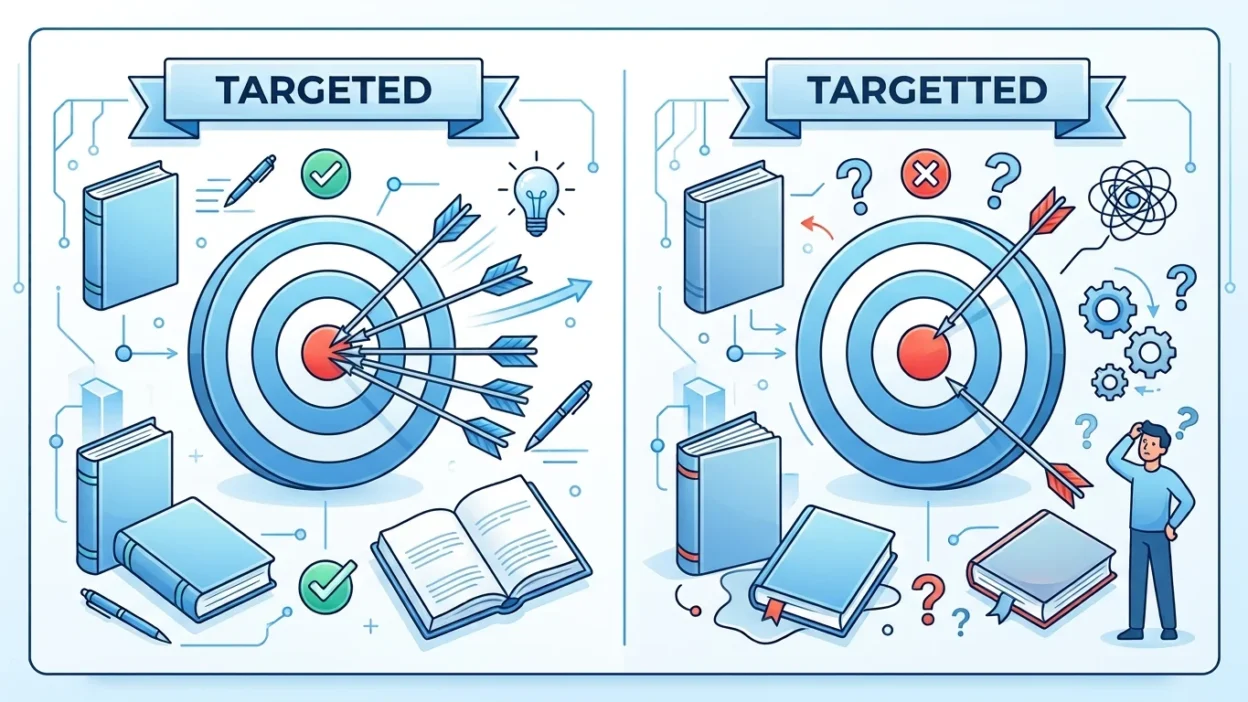
English spelling can be tricky, especially when words have more than one accepted form. One common question writers ask is whether to use targeted or targetted. Since both spellings appear online, it’s easy to wonder which one is correct and whether one is preferred over the other.
The good news is that both targeted and targetted are correct, but they are used differently depending on the variety of English. Targeted is the standard spelling in American English and is also the preferred spelling in most modern British English publications.
Targetted is an accepted British English variant, although it is much less common today. This guide explains the difference, when to use each spelling, and how to choose the right one for your audience.
Quick Answer
Both targeted and targetted are correct. Targeted is the preferred spelling in American English and is widely used around the world. Targetted is an accepted British English variant but is far less common. For most writing, targeted is the recommended choice.
Why People Confuse It
Many writers are unsure which spelling to use because:
- Both spellings appear in dictionaries.
- Different English style guides have different preferences.
- British and American English sometimes follow different spelling patterns.
- The word target ends with t, making some writers wonder whether the final consonant should be doubled.
- Online sources use both versions.
Today, targeted is by far the more common spelling in books, websites, newspapers, and academic writing.
First Word: Targeted
Targeted is the past tense and past participle of the verb target.
It means:
- Directed toward a specific goal
- Focused on a particular audience
- Selected intentionally
- Aimed at someone or something
It is commonly used in:
- Marketing
- Business
- Healthcare
- Education
- Technology
- Advertising
Example Sentences
- The company launched a targeted advertising campaign.
- Police targeted organized crime groups.
- Students received targeted support from teachers.
- The treatment was targeted to specific symptoms.
- The business targeted young professionals.
In modern English, this is the preferred spelling.
Second Word: Targetted
Targetted is an accepted British English variant of targeted.
Although it follows the British tendency to double certain consonants before adding endings, it is much less common than targeted.
You may occasionally see it in:
- Older British publications
- Some UK newspapers
- Informal British writing
However, even many British publishers now prefer targeted.
Example Sentences
- The campaign targetted local businesses.
- Schools targetted additional learning support.
These examples are grammatically acceptable in British English, but targeted is generally preferred.
Targeted vs Targetted Comparison Table
| Feature | Targeted | Targetted |
| | | |
| Correct Spelling | Yes | Yes |
| American English | Preferred | Rare |
| British English | Preferred by most publishers | Accepted variant |
| Modern Usage | Very common | Much less common |
| Recommended for International Writing | Yes | No |
| Example | The campaign targeted students. | The campaign targetted students. |
When to Use Each
Use targeted when writing:
- Academic papers
- Business documents
- Marketing content
- Websites
- Blogs
- Emails
- International communication
Use targetted only if:
- You are following a British style guide that specifically prefers it.
- You are maintaining consistency with an existing British publication.
For most writers, targeted is the safest and most widely accepted choice.
Examples
Here are several examples showing correct usage.
- The company targeted new customers.
- Doctors used targeted therapy to treat the disease.
- The advertisement targeted young adults.
- Police targeted illegal activities.
- Teachers provided targeted learning support.
- The campaign targeted local communities.
- Researchers targeted specific populations.
- The charity targeted families in need.
- The software includes targeted security features.
- The promotion targeted frequent shoppers.
- Some British publications have targetted similar audiences.
- Older UK newspapers occasionally used targetted instead of targeted.
Common Mistakes
Many people think only one spelling is correct.
That is not true.
Incorrect assumption:
- Targetted is always wrong.
Correct understanding:
- Targetted is an accepted British variant, although it is uncommon.
Another mistake is switching spellings within the same document.
Choose one spelling and use it consistently.
Memory Trick
An easy way to remember the preferred spelling is:
Think of marketed, started, and targeted.
All three commonly end with ed in modern English.
If you’re writing for an international audience, simply remember:
Targeted is the global favorite.
American vs British English
This is where the main difference appears.
American English
- Uses targeted almost exclusively.
British English
- Accepts both targeted and targetted.
- Most modern British dictionaries, publishers, and newspapers now prefer targeted.
If you’re unsure which audience you’re writing for, choose targeted.
Similar Words
These commonly confused spelling pairs can also improve your English writing.
- Focused and Focussed
- Benefited and Benefitted
- Modeled and Modelled
- Labeled and Labelled
- Traveled and Travelled
- Canceled and Cancelled
- Performed and Preformed
- Reinforce and Reenforce
- Affect and Effect
- Principal and Principle
Understanding regional spelling differences will make your writing more accurate and consistent.
Final Verdict
Both targeted and targetted are correct spellings.
However, targeted is the preferred form in American English and the most widely accepted spelling in modern British English.
It is also the better choice for international communication, business writing, academic work, and online content.
Unless you are following a specific British style guide, targeted is the spelling you should use.
Frequently Asked Questions
Is targeted or targetted correct?
Both are correct, but targeted is the preferred spelling in modern English.
Is targetted used in British English?
Yes. It is an accepted British English variant, although targeted is now more common.
Which spelling should I use in academic writing?
Use targeted, as it is the standard spelling in most academic journals and style guides.
Why do both spellings exist?
British English sometimes doubles the final consonant before adding endings, while American English usually does not. Over time, targeted became the dominant spelling in both varieties.
Is targetted wrong?
No. It is not wrong, but it is much less common than targeted.
Which spelling is better for SEO?
Targeted is the better choice because it is searched more often and is the preferred spelling across most English-speaking regions.
Should I use targeted in international business writing?
Yes. Targeted is the safest and most widely recognized spelling for global audiences.
Remember This
Both spellings are correct.
Targeted is the modern standard and the best choice for most writing.
Targetted is an accepted but less common British variant.
Conclusion
The difference between targeted vs targetted comes down to regional spelling preferences rather than meaning. Both forms describe something that has been directed toward a specific person, audience, or goal.
However, targeted has become the dominant spelling in American English and is now preferred by most British publishers as well.
If you want your writing to be clear, professional, and suitable for an international audience, targeted is the spelling to choose. It is widely recognized, commonly used, and accepted across nearly every type of modern English writing.

Joseph Richard is the administrator and a dedicated author at DrameyHut, overseeing the platform’s operations and content quality. Alongside his administrative role, he writes insightful articles on dream meanings, helping readers understand their subconscious mind. His work supports the mission of providing clear, meaningful, and engaging dream interpretations.