Many English words are confusing because they look and sound similar while carrying opposite meanings. Emersion and immersion are a great example. Although they differ by only one letter, these words describe entirely different actions. Using the wrong one can change the meaning of your sentence, especially in academic, scientific, educational, and everyday writing.
If you’ve ever wondered if to write emersion or immersion, you’re not alone. This guide explains the difference in simple terms, provides practical examples, highlights common mistakes, and shares an easy memory trick to help you remember the correct word. By the end, you’ll know exactly when to use emersion and when immersion is the better choice.
Quick Answer
Immersion means being completely surrounded by or deeply involved in something. Emersion means emerging from or coming out of a liquid or another surrounding environment. Use immersion when talking about deep involvement or being submerged. Use emersion when referring to coming out or emerging.
Why People Confuse It
Many writers mix up these words because:
- They differ by only one letter.
- Both come from similar Latin roots.
- Both are used in science and education.
- They sound similar when spoken.
- Both are correctly spelled English words.
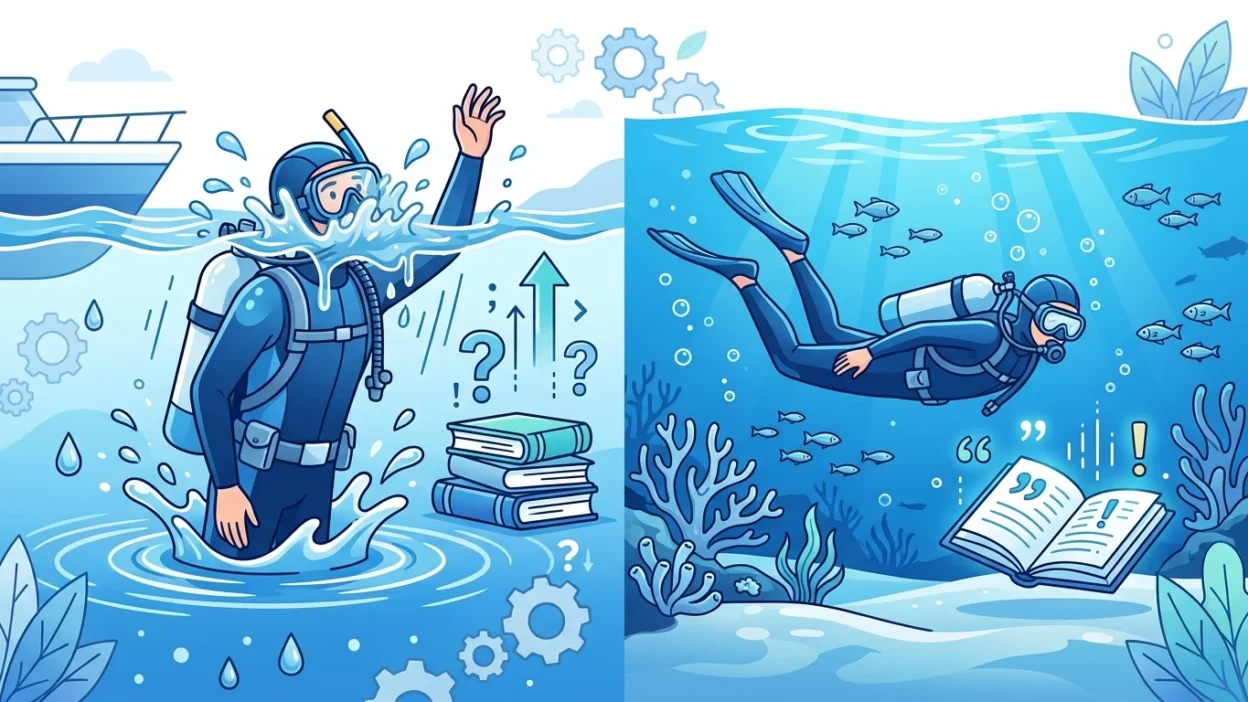
The easiest way to remember the difference is that immersion goes in, while emersion comes out.
First Word: Emersion
Emersion is a noun that means the act of emerging or coming out from water, another liquid, or an enclosed environment.
It is commonly used in:
- Biology
- Astronomy
- Marine science
- Medicine
- Environmental studies
Example Sentences
- The turtle’s emersion from the water attracted many visitors.
- Scientists observed the whale’s emersion after several minutes underwater.
- The diver’s emersion marked the end of the training session.
- The moon’s emersion from Earth’s shadow completed the eclipse.
- Researchers recorded the insect’s emersion from its cocoon.
In each example, something is coming out or emerging.
Second Word: Immersion
Immersion is a noun that means being completely surrounded by something or becoming deeply involved in an activity or experience.
It is widely used in:
- Language learning
- Education
- Virtual reality
- Gaming
- Travel
- Technology
- Water activities
Example Sentences
- Language immersion is one of the fastest ways to learn a new language.
- The game offers complete immersion through realistic graphics.
- Cultural immersion helped her understand local traditions.
- The recipe requires full immersion of the vegetables in water.
- Students benefit from classroom immersion programs.
Here, the focus is on being fully surrounded or deeply engaged.
Emersion vs Immersion Comparison Table
| Feature | Emersion | Immersion |
| | | |
| Part of Speech | Noun | Noun |
| Meaning | Coming out or emerging | Being fully surrounded or deeply involved |
| Direction | Outward | Inward |
| Common Contexts | Biology, astronomy, diving | Education, language learning, technology, travel |
| Example | The diver’s emersion was successful. | Language immersion improves fluency. |
When to Use Each
Use emersion when talking about:
- Coming out of water
- Emerging from an environment
- Astronomical events
- Marine animals
- Scientific observations
Use immersion when talking about:
- Learning languages
- Being deeply involved
- Virtual reality
- Reading books
- Water submersion
- Cultural experiences
Ask yourself one question.
Is something coming out?
Use emersion.
Is something going into or becoming deeply involved?
Use immersion.
Examples
Here are more than ten examples showing the correct usage.
- The diver’s emersion was carefully monitored.
- The whale’s emersion lasted only a few seconds.
- Astronomers observed the planet’s emersion from behind the moon.
- The frog’s emersion signaled the beginning of spring.
- Researchers documented the insect’s emersion from its shell.
- Language immersion improves speaking skills.
- Cultural immersion makes travel more meaningful.
- The virtual reality headset creates total immersion.
- Complete immersion in water tested the equipment.
- Students enjoyed an English immersion program.
- Reading novels provides mental immersion in fictional worlds.
- The submarine’s emersion surprised everyone watching.
Common Mistakes
Incorrect:
- The school offers an English emersion program.
Correct:
- The school offers an English immersion program.
Incorrect:
- The diver completed his immersion when he came out of the water.
Correct:
- The diver completed his emersion when he came out of the water.
Remember that immersion means going in, while emersion means coming out.
Memory Trick
A simple trick makes these words easy to remember.
Immersion begins with “Im”.
Think:
I’m inside.
That reminds you that immersion means being inside or fully surrounded.
Emersion begins with “E”.
Think:
Exit.
That reminds you that emersion means coming out or emerging.
American vs British English
Both American English and British English use these words with the same meanings.
There are no spelling differences.
- Immersion always refers to being deeply involved or submerged.
- Emersion always refers to emerging or coming out.
Similar Words
If you enjoy improving your English vocabulary, these commonly confused word pairs are also worth learning.
- Performed and Preformed
- Faring and Fairing
- Affect and Effect
- Accept and Except
- Complement and Compliment
- Principal and Principle
- Farther and Further
- Stationary and Stationery
- Elicit and Illicit
- Lose and Loose
Learning these similar word pairs can make your writing clearer and more accurate.
Final Verdict
Although emersion and immersion look almost identical, they describe opposite actions.
Choose immersion whenever someone or something is fully surrounded, deeply involved, or submerged.
Choose emersion whenever something emerges, rises, or comes out.
Remember this simple distinction, and you’ll avoid one of the most common vocabulary mistakes.
Frequently Asked Questions
What is the difference between emersion and immersion?
Immersion means being completely surrounded or deeply involved. Emersion means emerging or coming out.
Which is correct, language emersion or language immersion?
The correct phrase is language immersion because learners become surrounded by the language.
Is emersion a real English word?
Yes. Emersion is a correct English word commonly used in science, biology, astronomy, and diving.
Can immersion refer to water?
Yes. Immersion often means being completely submerged in water.
Is emersion the opposite of immersion?
Yes. In many scientific contexts, emersion is considered the opposite of immersion.
Which word is more common?
Immersion is much more common in everyday English because it is widely used in education, technology, travel, and entertainment.
Can I use emersion in everyday conversation?
You can, but it is relatively uncommon outside scientific or technical contexts.
Remember This
Immersion means going in.
Emersion means coming out.
If something is fully surrounded, use immersion. If something emerges or exits, use emersion.
Conclusion
Understanding the difference between emersion vs immersion is easier than it first appears. Although the words share similar spelling and pronunciation, they describe opposite movements. Immersion refers to being completely surrounded, deeply involved, or submerged, while emersion refers to emerging, rising, or coming out.
The easiest way to remember them is to think about direction. If something goes in or becomes fully involved, choose immersion. If something comes out or exits, choose emersion. Mastering this distinction will make your writing more accurate, professional, and easier for readers to understand.

Daniel Charles is a dedicated author and dream interpretation enthusiast at DrameyHut. He specializes in analyzing dream symbols and meanings, offering clear and insightful content for readers. His work aims to help individuals understand their subconscious thoughts, gain clarity, and explore the deeper messages hidden within their dreams.