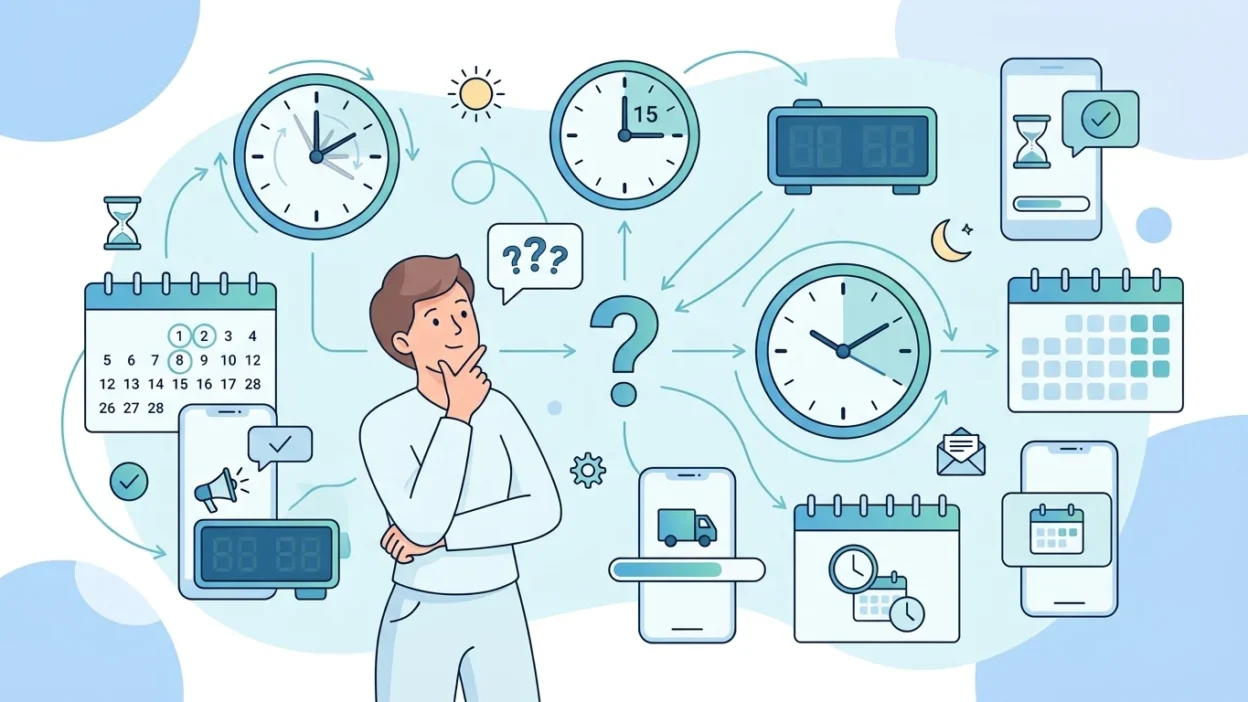
The word soon is one of the most common expressions in English, yet it can also be one of the most confusing. When someone says, “I’ll be there soon” or “I’ll call you soon,” you may wonder exactly how long that means. Does soon refer to a few minutes, a few hours, or even several days?
The truth is that soon does not describe a fixed amount of time. Its meaning depends on the situation, the speaker, and the expectations of the conversation.
Understanding the phrase how long is soon can help you avoid misunderstandings in everyday communication, professional settings, and online conversations.
This guide explains the meaning of soon, how long it usually lasts in different situations, common examples, and practical tips for using the word naturally.
Quick Answer
Soon means in a short amount of time, but there is no exact time limit. It can mean a few minutes, several hours, or even a few days depending on the context. The surrounding situation determines how long soon actually is.
What Does Soon Mean?
Soon is an adverb that means after a short time or before very long.
It is used when something is expected to happen in the near future without giving an exact time.
Examples include:
- I’ll call you soon.
- Dinner will be ready soon.
- We will leave soon.
- The results will arrive soon.
- Spring will be here soon.
In each example, the exact timing is not specified.
How Long Is Soon?
There is no universal definition of soon.
Instead, its meaning changes depending on the situation.
Here are some common interpretations.
| Situation | What Soon Usually Means |
| | |
| Text message | A few minutes to an hour |
| Phone call | Within minutes or later that day |
| Cooking | A few minutes |
| Business email | Within a few hours or one business day |
| Package delivery | A few days |
| Medical recovery | Days or weeks |
| Construction project | Weeks or months |
| Software update | Days, weeks, or months |
As you can see, soon always means relatively near, but the exact time depends on the circumstances.
Why Soon Can Be Confusing
People often interpret soon differently because everyone has different expectations.
For example:
- Your friend says, “I’ll be there soon,” meaning fifteen minutes.
- Your coworker says, “I’ll send the report soon,” meaning later today.
- A company says, “Coming soon,” meaning next month.
Without additional details, the word remains flexible.
When to Use Soon
Use soon when you want to express that something will happen in the near future but an exact time is either unknown or unnecessary.
Common situations include:
- Casual conversations
- Friendly text messages
- Emails
- Announcements
- Invitations
- Product launches
- Daily conversations
Examples:
- I’ll reply soon.
- We’ll see you soon.
- The movie starts soon.
- Your order will arrive soon.
- She hopes to return soon.
Examples of Soon in Sentences
Here are several examples of how soon is used naturally.
- I’ll call you soon.
- Dinner will be ready soon.
- We hope to see you soon.
- The meeting will begin soon.
- She will finish the project soon.
- The baby will wake up soon.
- They are moving soon.
- The rain should stop soon.
- Our vacation starts soon.
- He promised to reply soon.
- The store will open soon.
- New features are coming soon.
Common Mistakes
People sometimes assume soon always means within a few minutes.
That is not always true.
Incorrect assumption:
- He said “soon,” so he must mean five minutes.
Correct understanding:
- The meaning depends on the situation.
Another mistake is using soon when an exact time should be given.
Instead of saying:
- The meeting starts soon.
You could say:
- The meeting starts at 2:00 PM.
Specific times are often clearer in professional communication.
Memory Trick
An easy way to remember the meaning of soon is:
Soon means near, not now.
It describes something expected in the near future but does not tell you exactly when.
Think of soon as a flexible promise rather than a precise deadline.
American vs British English
Both American English and British English use the word soon in the same way.
Its meaning, spelling, and grammar are identical.
Whether you are speaking with someone in the United States, the United Kingdom, Canada, Australia, or another English speaking country, soon simply means before long.
Similar Words
These words are often used with or instead of soon.
- Shortly
- Before long
- In a little while
- Presently
- Momentarily
- In the near future
- Eventually
- Immediately
- Right away
- Promptly
Each has a slightly different meaning depending on urgency and context.
Final Verdict
There is no exact answer to how long is soon because the word is intentionally flexible.
In most situations, soon means within a reasonable amount of time based on the circumstances. Sometimes that means minutes, while in other situations it may mean days or even weeks.
Whenever timing is important, giving an exact time is better than simply saying soon.
Frequently Asked Questions
How long does soon usually mean?
It depends on the situation. It could mean a few minutes, several hours, a few days, or even longer in certain contexts.
Is soon a specific amount of time?
No. Soon is a relative expression and has no fixed definition.
Does soon mean immediately?
No. Soon means in the near future, while immediately means without delay.
Is soon different in American and British English?
No. Both varieties of English use soon with the same meaning.
Why do people interpret soon differently?
People have different expectations based on the situation, culture, and personal experience.
Should I use soon in professional emails?
Yes, but if timing is important, giving a specific deadline is usually clearer.
What is another word for soon?
Depending on the context, you can use shortly, before long, in a little while, or in the near future.
Remember This
Soon means in the near future, not at an exact time.
The exact meaning always depends on the situation and the expectations of the people involved.
Conclusion
Understanding how long is soon is important because the word does not represent a fixed amount of time. Instead, it describes something expected to happen in the near future.
If that means a few minutes, several hours, or a few days depends entirely on the context. This flexibility makes soon useful in everyday English, but it can also lead to misunderstandings if people expect different timeframes.
Whenever clarity matters, replacing soon with a specific time or deadline is the best choice. In casual conversations, however, soon remains a natural and widely accepted way to express that something will happen before long without committing to an exact schedule.

Daniel Charles is a dedicated author and dream interpretation enthusiast at DrameyHut. He specializes in analyzing dream symbols and meanings, offering clear and insightful content for readers. His work aims to help individuals understand their subconscious thoughts, gain clarity, and explore the deeper messages hidden within their dreams.