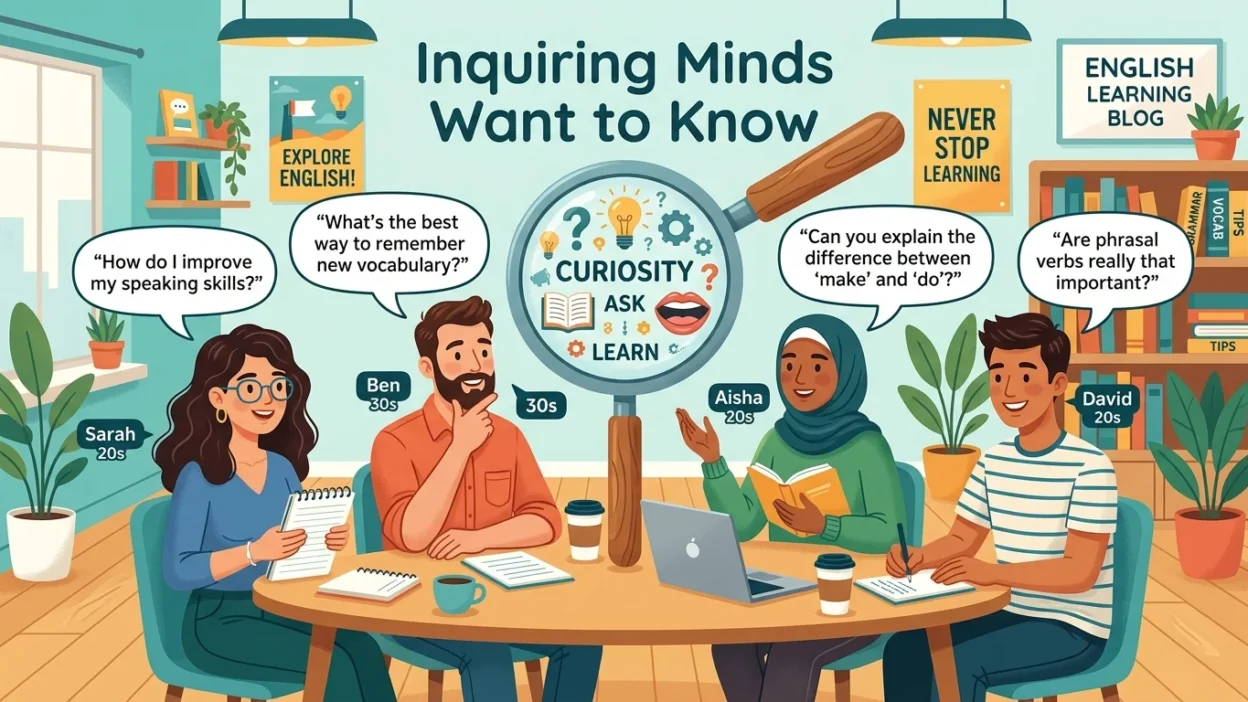
“Inquiring minds want to know” is a popular English expression used when someone is curious and wants to find out the answer to something. It is often used humorously or playfully, especially when asking about information that other people may also be curious about.
The expression became widely recognized through an advertising slogan, but today it is commonly used in everyday English. It can be sincere, humorous, or slightly teasing depending on the context.
Quick Answer
“Inquiring minds want to know” means curious people want to know the answer. It is usually a playful way of saying that you or other people are curious about something. Inquiring means curious or interested in finding out information.
Why People Use It
The expression is useful when someone wants an answer but does not want to sound overly serious.
For example:
You got the promotion? Inquiring minds want to know how you did it!
Here, the speaker is jokingly saying that people are curious about the details.
Inquiring Minds Want to Know
Meaning
Inquiring minds refers to people who are:
- Curious
- Interested in learning
- Eager to discover information
- Asking questions
Want to know simply means they want information or an answer.
Together:
Inquiring minds want to know = Curious people want to know.
Is It a Complete Sentence?
Yes.
Inquiring minds want to know. is a complete sentence.
The subject is:
inquiring minds
The verb is:
want
Because minds is plural, we use want, not wants.
Correct
Inquiring minds want to know. ✅
Incorrect
Inquiring minds wants to know. ❌
Examples
- You bought a new car? Inquiring minds want to know how much it cost.
- Inquiring minds want to know what happened next.
- You seem unusually happy today. Inquiring minds want to know why.
- Inquiring minds want to know how you solved the problem.
- So, who got the job? Inquiring minds want to know!
- You have a secret? Well, inquiring minds want to know.
- Inquiring minds want to know what your plans are.
- She posted an interesting photo, and inquiring minds wanted to know where it was taken.
Common Ways to Use It
As a playful question
You look different today. Inquiring minds want to know!
Before asking for details
Inquiring minds want to know: How did you manage to finish so quickly?
As a humorous comment
You disappeared for three days. Inquiring minds want to know what happened!
About yourself
You can also use it jokingly to mean “I want to know.”
Inquiring minds want to know. Where did you buy that jacket?
Common Mistakes
“Inquiring mind wants to know”
If you’re referring to one person, you could technically say:
An inquiring mind wants to know. ✅
But the established expression is:
Inquiring minds want to know. ✅
Because minds is plural, the verb is want.
“Enquiring minds want to know”
Enquiring is also a valid spelling, particularly in British English. However, inquiring minds want to know is the more widely recognized form of the famous expression.
Memory Trick
Remember:
Inquiring = curious
So:
Inquiring minds want to know = Curious people want to know.
Think of someone asking lots of questions because they want to understand something.
American vs British English
There is a spelling difference worth knowing.
American English: inquiring
British English: inquiring and enquiring can both be found, with enquiring traditionally used more often in some contexts.
However, the fixed expression is commonly written:
Inquiring minds want to know.
Similar Expressions
You can use these alternatives depending on the tone:
- I’m curious.
- I’d like to know.
- I’m wondering.
- Just wondering.
- Out of curiosity…
- I’d love to know.
- What’s the story?
- What’s the answer?
- Tell me more.
- I’m dying to know.
Final Verdict
“Inquiring minds want to know” is a correct and widely understood English expression meaning curious people want to know the answer or details about something.
It is often playful or humorous rather than completely formal. You can use it when you want to express curiosity, especially when you suspect that other people are curious too.
Remember This
Inquiring = curious
Inquiring minds want to know = Curious people want the answer. ✅
Example:
You got a new job? Inquiring minds want to know!
FAQs
What does “inquiring minds want to know” mean?
It means curious people want to know the answer or details about something.
Is “inquiring minds want to know” an idiom?
It is a widely recognized expression or catchphrase rather than a traditional idiom. It is often used humorously to express curiosity.
Is “inquiring minds want to know” correct grammar?
Yes. Minds is plural, so want is the correct verb.
What does “inquiring” mean?
Inquiring means curious, questioning, or interested in discovering information.
Is “inquiring minds want to know” formal?
Not usually. It is generally conversational and can sound playful, humorous, or teasing.
Can I use “inquiring minds want to know” about myself?
Yes. It can be used humorously to mean “I’m curious and I want to know.”
Is it “inquiring” or “enquiring”?
Both spellings exist. Inquiring is especially common in American English, while enquiring is also used in British English. The familiar expression is “inquiring minds want to know.”
Conclusion
“Inquiring minds want to know” is a fun and natural expression for saying that someone is curious about something. It can refer to your own curiosity or suggest that many people would like to know the answer.
The expression is especially useful in casual conversations, social media, articles, and humorous situations. Just remember that inquiring means curious, so inquiring minds want to know simply means curious people want answers.

Christopher Thomas is a passionate writer and dream researcher dedicated to exploring the meanings behind dreams. As an author at DrameyHut, he creates insightful and easy-to-understand interpretations that help readers connect with their subconscious mind. His work focuses on guiding individuals toward self-discovery, clarity, and a deeper understanding of their inner thoughts.