
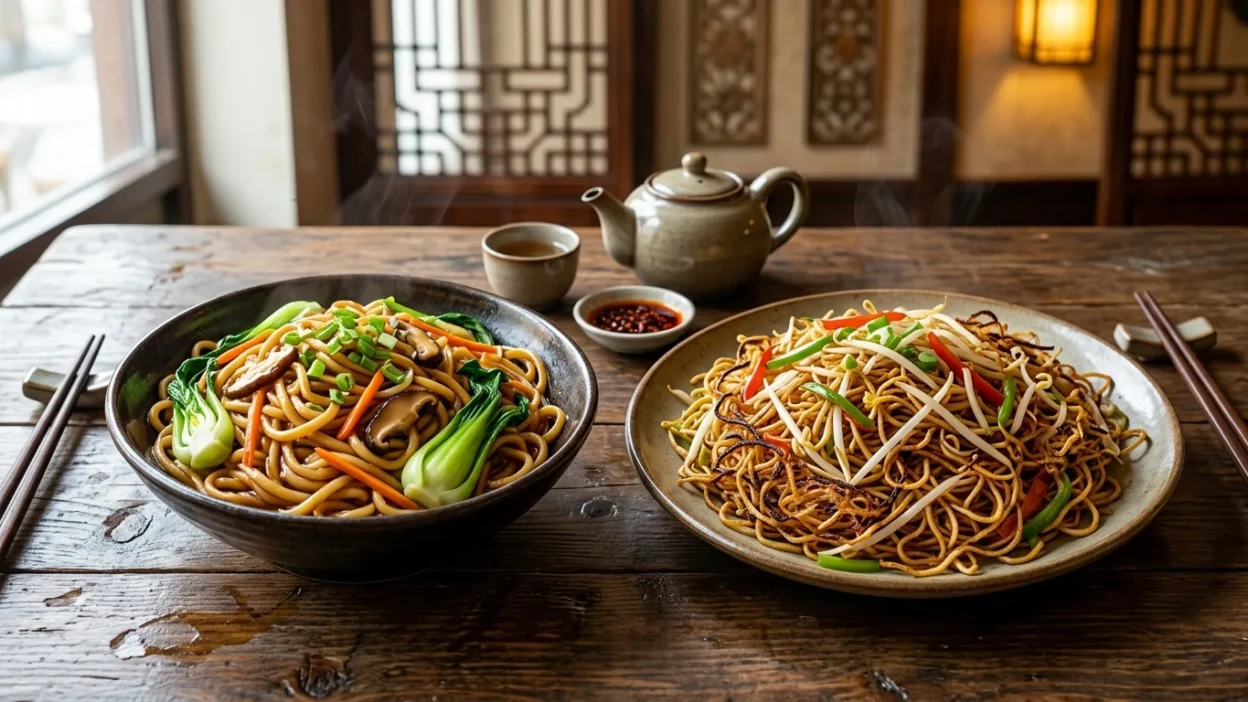
Lo mein and chow mein are two popular Chinese noodle dishes that often look similar on a restaurant menu. Both can contain noodles, vegetables, meat, seafood, and savory sauces, so it is easy to assume they are basically the same dish. They are not. The biggest difference is how the noodles are prepared and finished.
Lo mein usually features soft, chewy noodles that are cooked and then tossed with sauce, vegetables, and protein. Chow mein focuses on stir fried noodles, which can range from lightly browned and firm to distinctly crispy depending on the style. The exact noodles and preparation can also vary by region and restaurant, especially in Chinese American cuisine.
Quick Answer
The main difference between lo mein and chow mein is the cooking method. Lo mein uses cooked noodles that are tossed with sauce and other ingredients, creating a soft, chewy texture. Chow mein uses noodles that are stir fried, often producing a firmer or crispier texture. Both can contain similar vegetables, proteins, and seasonings.
Why People Confuse Lo Mein and Chow Mein
Lo mein and chow mein are easy to confuse because they share many ingredients.
Both dishes commonly contain:
• Wheat noodles
• Vegetables
• Chicken, beef, pork, shrimp, or tofu
• Soy based sauces
• Aromatic ingredients such as garlic and scallions
The biggest clue is not necessarily the ingredients. It is what happens to the noodles during cooking.
The word mein refers to noodles. Chow mein is associated with fried or stir fried noodles, while lo mein refers to tossed noodles.
What Is Lo Mein?
Lo mein is a noodle dish in which cooked noodles are tossed together with sauce, vegetables, and often meat or seafood.
The noodles are generally soft, tender, and chewy. They are not normally fried until crispy. Instead, they are combined with the other ingredients toward the end of cooking so the sauce can coat the noodles.
Typical lo mein ingredients include:
• Egg noodles
• Chicken or beef
• Shrimp
• Carrots
• Cabbage
• Snow peas
• Scallions
• Soy sauce
• Oyster sauce
• Sesame oil
American style lo mein is often fairly saucy, although recipes and restaurant preparations vary.
What Is Chow Mein?
Chow mein is a noodle dish centered on stir fried noodles. The noodles may be par cooked before being placed in a hot wok or pan, where they are fried with vegetables, protein, and seasonings.
Depending on the style, chow mein noodles can be lightly crisp or quite crunchy. Cantonese style preparations can feature noodles that are fried until crisp and then topped with other ingredients. American Chinese versions can also vary considerably from one restaurant to another.
Lo Mein vs Chow Mein Comparison Table
| Feature | Lo Mein | Chow Mein |
|---|---|---|
| Main idea | Tossed noodles | Stir fried noodles |
| Noodle texture | Soft and chewy | Firm, browned, or crispy |
| Cooking method | Cooked, then tossed with ingredients and sauce | Par cooked or cooked, then stir fried |
| Sauce | Usually more noticeable | Often lighter or less abundant |
| Oil | Usually less important to the noodle texture | Important for stir frying and crisping |
| Common noodles | Wheat or egg noodles | Wheat or egg noodles |
| Flavor | Saucy and savory | Toasty, savory, and sometimes smoky |
| Best for | People who like soft, saucy noodles | People who like firmer or crispy noodles |
The distinction is useful, but it is not absolute. Restaurant styles differ, and the names can be used somewhat differently depending on the region.
When to Choose Lo Mein
Choose lo mein if you prefer:
• Soft noodles
• Chewy noodles
• More sauce
• A rich and savory coating
• A comforting noodle dish
• Noodles mixed closely with vegetables and protein
Lo mein is particularly appealing if you enjoy noodles that absorb sauce and remain tender.
For example, chicken lo mein usually gives you soft noodles coated in a savory sauce with chicken and vegetables.
When to Choose Chow Mein
Choose chow mein if you prefer:
• Firmer noodles
• Crisp edges
• A more toasted flavor
• Less sauce on the noodles
• High heat stir frying
• Greater contrast between textures
If you like a little crunch in your noodles, chow mein is usually the better choice.
However, remember that chow mein is not always extremely crispy. Some versions are softer and simply have a firmer, stir fried texture.
10 Examples of Lo Mein vs Chow Mein
1. Chicken Lo Mein
Soft noodles are tossed with chicken, vegetables, and savory sauce.
2. Chicken Chow Mein
Noodles are stir fried with chicken and vegetables, usually creating a firmer texture.
3. Beef Lo Mein
Tender noodles are coated with sauce and combined with beef and vegetables.
4. Beef Chow Mein
Beef and vegetables are stir fried with noodles, often producing browned or crisp noodle edges.
5. Shrimp Lo Mein
Cooked noodles are tossed with shrimp, vegetables, and sauce.
6. Shrimp Chow Mein
Shrimp and vegetables are combined with stir fried noodles.
7. Vegetable Lo Mein
The noodles remain soft while vegetables and sauce provide most of the flavor.
8. Vegetable Chow Mein
Vegetables are stir fried with noodles, creating a dish with more texture.
9. Crispy Chow Mein
The noodles are fried until distinctly crisp and may be served with vegetables or other toppings.
10. Saucy Lo Mein
A generous amount of sauce coats the noodles, giving the dish a glossy and soft texture.
Common Mistakes
Mistake 1: Thinking the noodles are completely different
Many versions of lo mein and chow mein can use similar wheat or egg noodles. The cooking method is often the more important distinction.
Mistake 2: Assuming every chow mein is crunchy
Chow mein can be crispy, but not every version is extremely crunchy. Regional and restaurant styles differ.
Mistake 3: Assuming lo mein has no stir frying
The vegetables and protein in lo mein can still be stir fried. The important difference is that the cooked noodles are generally tossed into the finished mixture rather than being fried until crisp.
Mistake 4: Assuming the sauce is always identical
Both dishes can use similar ingredients such as soy sauce and oyster sauce, but the amount and consistency of sauce can differ.
Mistake 5: Treating restaurant names as universal
Chinese food varies significantly by region. A dish called chow mein in one restaurant may not look exactly like chow mein somewhere else.
Memory Trick
Remember it this way:
Lo mein is tossed. Chow mein is fried.
Think of lo as gently mixing or tossing the noodles.
Think of chow as cooking them through stir frying.
The exact preparation varies, but this simple distinction will help you understand most restaurant menus.
American vs British English
The terms lo mein and chow mein are used in both American and British English.
However, the dishes themselves can vary depending on the restaurant and regional Chinese cooking traditions.
In the United States, both names are especially familiar from Chinese American restaurant menus. American versions may differ considerably from traditional regional preparations in China.
The spelling lo mein is generally preferred in English. Chow mein is also the standard spelling.
Similar Noodle Dishes
If you enjoy lo mein or chow mein, you may also encounter:
• Singapore noodles
• Dan dan noodles
• Yakisoba
• Chow fun
• Beef chow fun
• Yaki udon
• Pad see ew
• Pad Thai
• Hakka noodles
These dishes may look similar, but they use different noodles, sauces, ingredients, and cooking traditions.
Lo Mein vs Chow Mein for Different Preferences
| If you want… | Better choice |
|---|---|
| Soft noodles | Lo mein |
| Chewy noodles | Lo mein |
| More sauce | Lo mein |
| Crispy noodles | Chow mein |
| Firmer noodles | Chow mein |
| Toasted flavor | Chow mein |
| A saucy comfort meal | Lo mein |
| More textural contrast | Chow mein |
Which Is Healthier?
Neither dish is automatically healthier.
The nutritional profile depends on the portion size, amount of oil, sauce, protein, and vegetables used.
Lo mein may contain a substantial amount of sauce, while chow mein can use more oil during the frying process. Restaurant versions can therefore be quite different from homemade versions.
If you want a lighter meal, focus on the overall ingredients rather than choosing solely based on the name. More vegetables, a reasonable noodle portion, and moderate amounts of oil and sauce can make either dish more balanced.
Which One Tastes Better?
That depends on your preference.
If you love soft, chewy noodles covered in savory sauce, lo mein is probably the better choice.
If you prefer browned, firm, or crispy noodles with a toasted flavor, chow mein may be more satisfying.
There is no universally better option. The best choice depends on the texture and amount of sauce you enjoy.
Final Verdict
The simplest way to understand lo mein vs chow mein is to focus on the noodles. Lo mein is generally made with cooked noodles that are tossed with sauce, vegetables, and protein. Chow mein centers on noodles that are stir fried, which can give them a firmer, browned, or crispy texture.
Choose lo mein when you want soft, chewy, saucy noodles. Choose chow mein when you want firmer or crispier noodles with a more toasted character. Because recipes vary by region and restaurant, the exact appearance and texture can differ.
FAQs
Is lo mein healthier than chow mein?
Not necessarily. Both can vary widely in calories, sodium, oil, sauce, protein, and vegetables. The preparation and portion size matter more than the name alone.
Is chow mein crispy?
It can be. Some chow mein is fried until quite crispy, while other versions are simply firm and stir fried. The style varies by restaurant and region.
Is lo mein fried?
The noodles in lo mein are generally cooked and then tossed with sauce and other ingredients rather than fried until crispy. The vegetables and protein may still be stir fried.
Do lo mein and chow mein use the same noodles?
They can. Both dishes commonly use wheat or egg noodles, although the exact noodle type varies by preparation. The cooking method is often the key distinction.
Which has more sauce, lo mein or chow mein?
Lo mein generally has more sauce coating the noodles. Chow mein is often prepared with less sauce so the noodles can retain their fried texture.
Which tastes better, lo mein or chow mein?
It depends on what you prefer. Lo mein is better for soft and saucy noodles, while chow mein is better for firm or crispy noodles.
Can chow mein be soft?
Yes. Not every chow mein preparation is crunchy. Some styles produce noodles that are relatively soft while still being stir fried.
What does lo mein mean?
Lo mein refers to tossed noodles. The name describes the way the noodles are handled and combined with the other ingredients.
Remember This
Lo mein means tossed noodles, while chow mein means stir fried noodles.
Lo mein is usually soft, chewy, and saucy. Chow mein is generally firmer, more browned, or crispy. The two dishes can share similar noodles and ingredients, so the cooking method is the easiest way to tell them apart.
Conclusion
Lo mein and chow mein are closely related noodle dishes, but their preparation gives them different textures and eating experiences. Lo mein uses cooked noodles that are tossed with sauce and other ingredients, while chow mein uses noodles that are stir fried, often creating a firmer or crispier result.
If you prefer soft noodles with plenty of savory sauce, order lo mein. If you enjoy crispy or browned noodles and a more toasted flavor, choose chow mein. Once you remember lo means tossed and chow means fried, the difference becomes much easier to understand.

Nancy Lisa is a passionate writer and contributor at DrameyHut, focused on uncovering the deeper meanings behind dreams. She creates engaging and insightful content that helps readers interpret their dreams and understand their subconscious thoughts. Her work inspires self-reflection, clarity, and a stronger connection to inner emotions.