Many English learners and even native speakers struggle with greatful vs grateful because the two words look very similar. Since the word great is a common English word, it’s easy to assume that greatful should also be correct.
However, English spelling often follows historical patterns rather than modern logic, making some words confusing.
If you have ever wondered if you should write greatful or grateful, this guide will clear up the confusion. You’ll learn the correct spelling, understand why people mix them up, see plenty of real life examples, and discover an easy memory trick that helps you remember the right word forever.
By the end, you’ll confidently know when and how to use grateful in everyday writing.
Quick Answer
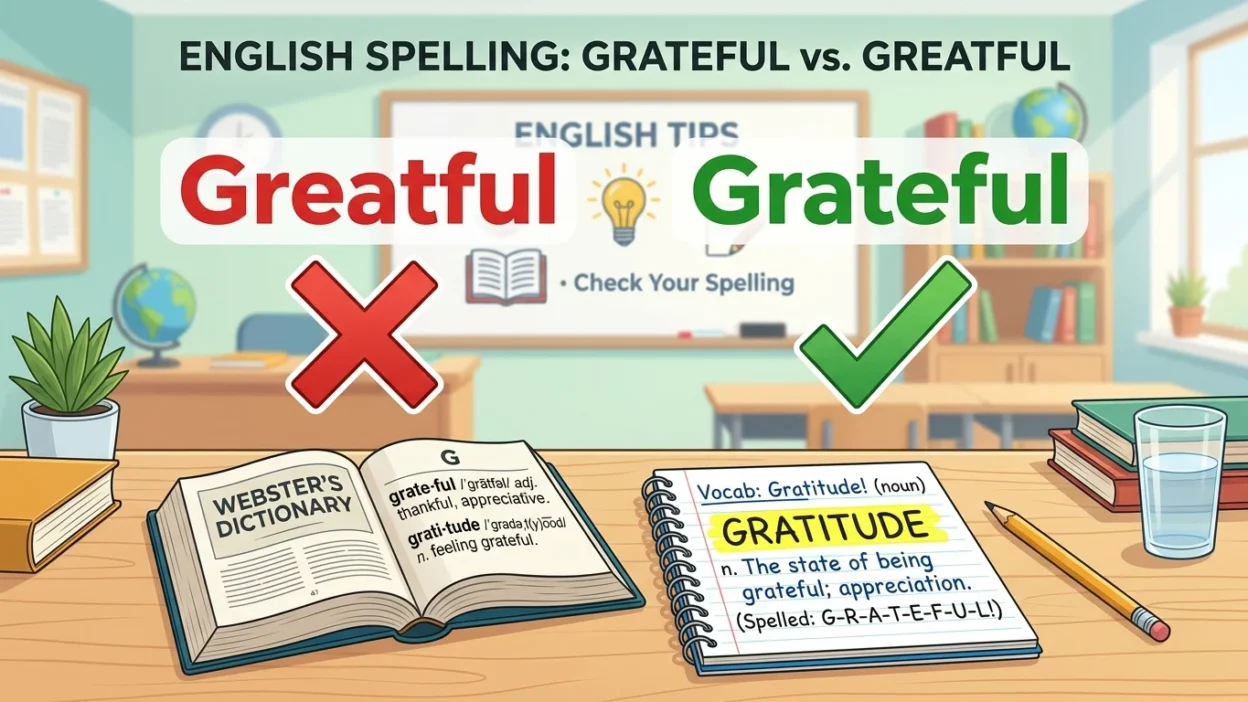
Grateful is the correct spelling in English. Greatful is a common misspelling and should never be used in formal or informal writing. Use grateful whenever you want to express appreciation, thankfulness, or gratitude toward someone or something.
Why People Confuse It
The confusion happens because the word great is familiar, and many people naturally assume that adding ful creates greatful.
Another reason is pronunciation. When spoken aloud, grateful sounds very similar to greatful, making the incorrect spelling seem believable.
People also tend to type words the way they sound, which leads to this frequent spelling mistake.
Grateful
Grateful is the correct English word.
It is an adjective that means feeling thankful, appreciative, or thankful for kindness, help, or good fortune.
Meaning
Someone who is grateful appreciates what they have received.
Synonyms
- Thankful
- Appreciative
- Obliged
- Indebted
- Thankfulhearted
Examples
- I am grateful for your support.
- She felt grateful after receiving the scholarship.
- We are grateful to everyone who volunteered.
- He was grateful for another chance.
- They remained grateful throughout their lives.
Greatful
Greatful is not a correct English word.
Although it appears logical because of the word great, standard English dictionaries do not recognize greatful as an acceptable spelling.
If you write greatful, spell checkers and editors will usually mark it as incorrect.
Comparison Table
| Feature | Grateful | Greatful |
|---|---|---|
| Correct spelling | ✅ Yes | ❌ No |
| Recognized in dictionaries | ✅ Yes | ❌ No |
| Means thankful | ✅ Yes | ❌ No |
| Appropriate in formal writing | ✅ Yes | ❌ No |
| Common mistake | ❌ No | ✅ Yes |
When to Use Each
Use grateful whenever you want to express thankfulness or appreciation.
Examples include:
- Thanking someone for help
- Writing professional emails
- Expressing appreciation in speeches
- Academic writing
- Personal messages
- Social media captions
- Thank you notes
Never use greatful because it is considered a spelling error.
Examples
Here are more than ten examples showing the correct usage.
- I am grateful for your kindness.
- She felt grateful after passing the exam.
- We are grateful to our teachers.
- He was grateful for the opportunity.
- The family was grateful for everyone’s support.
- I will always be grateful to my parents.
- They were grateful that everyone stayed safe.
- She wrote a grateful letter to her mentor.
- We remain grateful for your generosity.
- I’m truly grateful for your friendship.
- Our team is grateful for your patience.
- The community felt grateful after receiving donations.
Common Mistakes
Many writers accidentally make these errors.
- Writing greatful instead of grateful
- Assuming the word comes directly from great
- Forgetting to proofread emails
- Ignoring spell checker suggestions
- Confusing grateful with gratitude
Correct:
- I am grateful for your help.
Incorrect:
- I am greatful for your help.
Memory Trick
A simple trick is to remember that grateful comes from gratitude, not great.
Think of this sentence:
Gratitude makes you grateful.
Since both words begin with grat, you’ll remember the correct spelling much more easily.
American vs British English
Good news for English learners.
Both American English and British English use exactly the same spelling:
Grateful
There is no regional difference between the two varieties of English.
Similar Words
If you are learning English vocabulary, you may also find these words helpful.
- Grateful
- Gratitude
- Thankfully
- Thankful
- Appreciative
- Appreciation
- Blessed
- Obliged
- Indebted
- Recognize
These words often appear together in conversations, essays, and professional writing.
Final Verdict
The answer is simple.
Grateful is the only correct spelling.
Greatful is always a spelling mistake.
Whenever you want to express appreciation, kindness, or thankfulness, choose grateful with confidence. Remember that the word is connected to gratitude, making it much easier to recall the correct spelling.
Remember This
Always write grateful, never greatful.
Think:
Gratitude → Grateful
Not:
Great → Greatful
This simple connection will help you avoid one of the most common English spelling mistakes.
Frequently Asked Questions
Is greatful a real word?
No. Greatful is not a recognized English word. It is a common misspelling of grateful.
Which spelling is correct, grateful or greatful?
Grateful is the correct spelling in all forms of English.
Why do people write greatful?
People often confuse the spelling because the word great is common, and grateful sounds similar when spoken.
Is grateful an adjective?
Yes. Grateful is an adjective that describes someone who feels thankful or appreciative.
Is grateful used in formal writing?
Yes. Grateful is appropriate in academic, professional, business, and everyday writing.
Does British English spell it differently?
No. British English and American English both use grateful.
What is the noun form of grateful?
The noun form is gratitude.
Conclusion
English spelling can sometimes be misleading, and greatful vs grateful is a perfect example. Although greatful looks believable because of the word great, it is not accepted in standard English
. The correct spelling has always been grateful, which comes from the noun gratitude.
The easiest way to remember the difference is to connect grateful with gratitude. If you’re writing an email, an essay, a thank you note, or a social media post, using the correct spelling will make your writing more accurate and professional. With a little practice, this common mistake will quickly become a thing of the past.

Daniel Charles is a dedicated author and dream interpretation enthusiast at DrameyHut. He specializes in analyzing dream symbols and meanings, offering clear and insightful content for readers. His work aims to help individuals understand their subconscious thoughts, gain clarity, and explore the deeper messages hidden within their dreams.