Tear vs tare are two words that look and sound different but can easily confuse English learners because both have several meanings. The good news is that their uses are quite different once you know what each word refers to.
Tear is a common English word that can refer to ripping something apart, a drop of liquid from the eye, or moving quickly. Tare, on the other hand, is mainly used in weighing, packaging, and measurement. It can also refer to certain plants, although that meaning is much less common.
Understanding the difference between tear and tare is important because using the wrong word can completely change your sentence. In this guide, you will learn their meanings, pronunciation, examples, common mistakes, and a simple trick to remember which one to use.
Quick Answer: Tear vs Tare
Tear usually means to rip something, a drop from the eye, or to move quickly. Tare is mainly used in weighing to refer to the weight of a container or packaging that must be deducted from the total weight.
Easy rule:
Tear = rip, eye liquid, or move quickly
Tare = container weight or a type of plant
What Does “Tear” Mean?
Tear has several meanings and can function as both a verb and a noun.
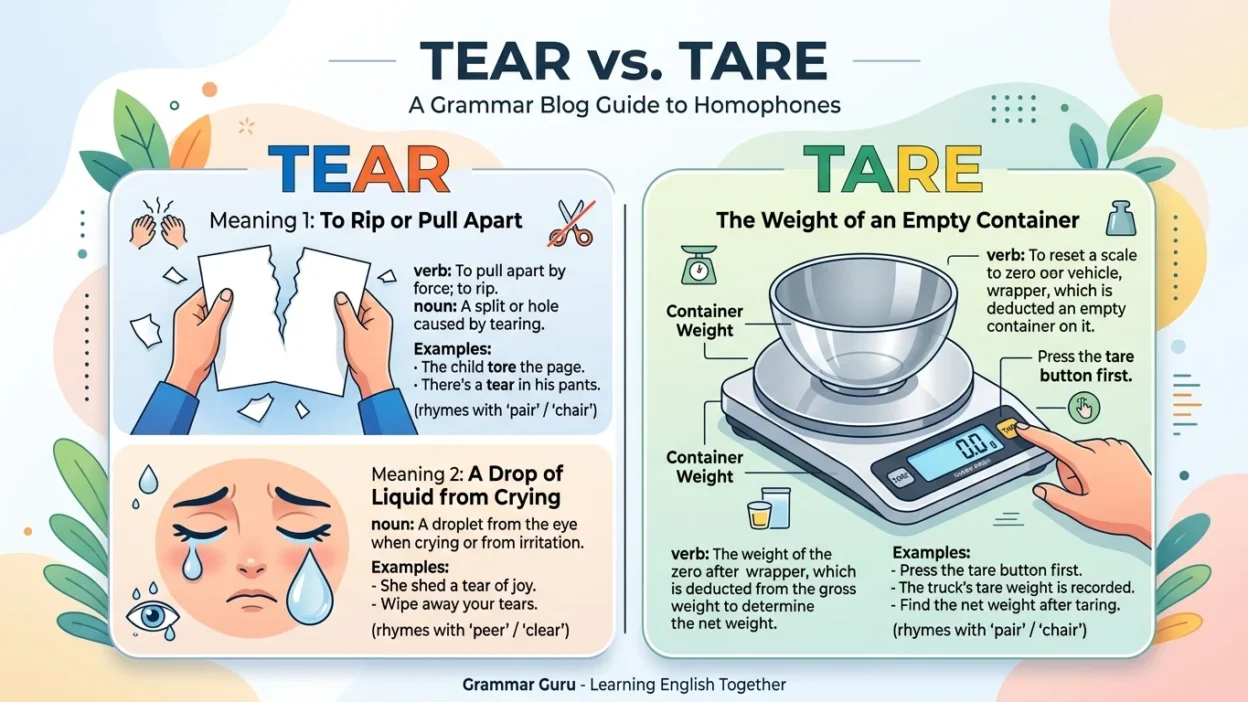
As a verb, tear can mean to pull or rip something apart.
Examples:
- Be careful not to tear the paper.
- She accidentally tore her dress.
- The dog tore the pillow apart.
- He tore the letter into pieces.
The past tense of this meaning is tore, and the past participle is torn.
Tear as a Drop of Liquid from the Eye
Tear can also mean a drop of salty liquid produced by the eyes, especially when someone is crying or experiencing irritation.
Examples:
- A tear rolled down her cheek.
- He wiped a tear from his eye.
- She had tears in her eyes.
- The sad movie brought a tear to my eye.
The plural form is tears.
Tear Meaning “Move Quickly”
Tear can also be an informal verb meaning to move very quickly.
Examples:
- The children tore down the street.
- He tore out of the house when he heard the news.
- The car was tearing along the highway.
This meaning is common in informal English.
How Do You Pronounce “Tear”?
One interesting feature of tear is that it has two different pronunciations, depending on its meaning.
When tear means “rip,” it is pronounced like “tair.”
Example:
- Don’t tear the paper.
When tear means the liquid produced by your eyes, it is pronounced like “teer.”
Example:
- A tear fell from her eye.
So the spelling is the same, but the pronunciation changes according to the meaning.
What Does “Tare” Mean?
Tare is much less common than tear. Its most important meaning is related to weight and measurement.
In weighing, tare refers to the weight of a container or packaging that is deducted from the total weight to determine the weight of the contents.
For example, imagine you put a box of rice on a scale. The scale measures the weight of both the rice and the box. The tare weight is the weight of the empty box.
If the box weighs 0.5 kilograms and the box plus rice weighs 5.5 kilograms, the rice itself weighs 5 kilograms.
Tare as a Verb
Tare can also be used as a verb meaning to set a scale to account for the weight of the container.
Examples:
- Please tare the scale before weighing the ingredients.
- The machine automatically tares the container.
- We need to tare the weighing scale first.
This use is especially common in laboratories, kitchens, warehouses, manufacturing, and retail settings.
Tare as a Plant
Tare can also refer to certain plants in the pea family. This meaning is relatively uncommon in everyday conversation.
You may encounter the word in botanical, agricultural, or historical writing.
For most everyday English situations involving tear vs tare, the measurement meaning of tare is the one worth remembering.
Tear vs Tare: Comparison Table
| Word | Main Meaning | Part of Speech | Example |
|---|---|---|---|
| Tear | To rip or pull apart | Verb | Don’t tear the paper. |
| Tear | Liquid from the eye | Noun | A tear rolled down her cheek. |
| Tear | Move very quickly | Verb | The car tore down the road. |
| Tare | Weight of a container | Noun | The tare weight is 500 grams. |
| Tare | Adjust a scale for container weight | Verb | Tare the scale before weighing. |
| Tare | A type of plant | Noun | The field contained various tare plants. |
When to Use “Tear”
Use tear when you mean:
- To rip or damage something by pulling it apart
- A drop of liquid from someone’s eye
- To move somewhere very quickly
- A rip or hole in fabric or another material
Examples:
Ripping:
- I accidentally tore the envelope.
Eye liquid:
- A tear appeared in her eye.
Moving quickly:
- He tore down the stairs.
A rip:
- There is a tear in my shirt.
When to Use “Tare”
Use tare mainly when talking about weights, containers, scales, and measurements.
Examples:
- What is the tare weight of the container?
- Tare the scale before adding the ingredients.
- The package has a tare weight of 200 grams.
- The digital scale automatically calculates the tare.
If you are talking about crying, ripping, or moving quickly, you almost certainly need tear, not tare.
Tear vs Tare Examples
Here are some examples that make the difference easier to see.
- Please don’t tear the page.
- A tear ran down her cheek.
- The children tore through the house.
- There is a small tear in my jacket.
- Please tare the scale before adding the bowl.
- The tare weight of the container is 300 grams.
- The scale automatically tares the empty container.
- He accidentally tore the package.
- She wiped a tear from her face.
- The technician checked the tare setting on the machine.
- The wind tore the flag.
- We need to subtract the tare weight from the gross weight.
Common Mistakes with Tear and Tare
Mistake 1: Using “tare” for crying
Incorrect:
- A tare fell from her eye.
Correct:
- A tear fell from her eye.
Remember that liquid from the eye is always spelled tear.
Mistake 2: Using “tear” for a scale
Incorrect:
- Tear the scale before weighing the ingredients.
Correct:
- Tare the scale before weighing the ingredients.
When you are adjusting a scale to remove the container’s weight, use tare.
Mistake 3: Confusing “tear” with “torn”
The forms of tear can be confusing.
For the meaning “rip”:
- Present: tear
- Past: tore
- Past participle: torn
- Present participle: tearing
Examples:
- I tear the paper.
- I tore the paper yesterday.
- I have torn the paper.
- I am tearing the paper.
A Simple Memory Trick
Here is an easy way to remember tear vs tare:
Tear = things can rip or eyes can cry.
Think:
Tear → tears from your eyes
Tare = scale and container weight.
Think:
Tare → weighing
You can also remember:
Tare belongs to the scale. Tear belongs to the paper or the eye.
Tear vs Tare vs Tier
English learners sometimes confuse tear and tare with another similar sounding word: tier.
Tear can mean rip or a drop from the eye.
Tare relates mainly to weighing and container weight.
Tier means a level, rank, or row.
Examples:
- Don’t tear the paper.
- Check the tare weight.
- This product is in the highest tier.
These three words have different spellings and meanings, even though their pronunciation can sometimes cause confusion.
Is “Tare” a Common Word?
Tare is much less common in everyday conversation than tear.
You are most likely to see tare when reading about:
- Digital scales
- Food packaging
- Shipping
- Laboratories
- Manufacturing
- Warehousing
- Scientific measurements
- Gross weight and net weight
In ordinary conversation, tear is much more common.
American vs British English
The meanings of tear and tare are essentially the same in American and British English.
Both varieties use tear for ripping, eye liquid, and rapid movement.
Both also use tare in contexts involving weighing and container weight.
There is no major American versus British distinction that changes the basic rule.
Related Words and Phrases
Words Related to Tear
Depending on the meaning, related words include:
- Rip
- Split
- Shred
- Rend
- Cry
- Weep
- Drop
- Rush
For example:
- She tore the paper.
- She ripped the paper.
Words Related to Tare
Words commonly associated with tare include:
- Weight
- Scale
- Container
- Packaging
- Gross weight
- Net weight
- Measurement
- Deduction
These associations make tare relatively easy to identify when you see it in context.
Final Verdict: Tear or Tare?
The difference is simple once you focus on meaning.
Tear is the much more common word. It can mean to rip something, a drop of liquid from the eye, or to move very quickly.
Tare is mainly connected with weighing. It refers to the weight of a container or the process of adjusting a scale to account for that container.
Remember:
Tear = rip, eye liquid, or move quickly.
Tare = container weight or adjust a scale.
If you are talking about paper, clothing, crying, or something moving quickly, choose tear. If you are talking about a scale or the weight of packaging, choose tare.
FAQs About Tear vs Tare
Is “tear” and “tare” the same thing?
No. Tear and tare have different meanings. Tear can mean to rip something or a drop of liquid from the eye, while tare is mainly associated with the weight of a container or adjusting a scale.
What is the difference between tare and tear?
Tear means to rip, a drop from the eye, or move quickly. Tare refers mainly to container weight or adjusting a scale to account for the container.
Is it “tear weight” or “tare weight”?
The correct term is tare weight. It refers to the weight of a container or packaging without its contents.
Is it “tear the scale” or “tare the scale”?
The correct expression is tare the scale when you mean adjusting the scale so the container’s weight is excluded.
How do you pronounce tear?
Tear has two pronunciations. When it means “rip,” it sounds like tair. When it means liquid from the eye, it sounds like teer.
How do you remember tear vs tare?
Remember: tear is associated with ripping or crying, while tare is associated with weighing. Think tare = scale.
Conclusion
Although tear and tare look similar, they have very different meanings. Tear is used for ripping, eye liquid, and rapid movement, while tare is primarily a measurement term related to containers and scales.
The easiest rule is simple: tear belongs to ripping and crying, while tare belongs to weighing. Once you connect tare with a scale and tear with a rip or a teardrop, the difference becomes much easier to remember.
Remember This
Tear = rip, cry, or move quickly.
Tare = container weight or scale adjustment.
Tear the paper.
A tear fell from her eye.
Tare the scale.
Check the tare weight.

Daniel Charles is a dedicated author and dream interpretation enthusiast at DrameyHut. He specializes in analyzing dream symbols and meanings, offering clear and insightful content for readers. His work aims to help individuals understand their subconscious thoughts, gain clarity, and explore the deeper messages hidden within their dreams.