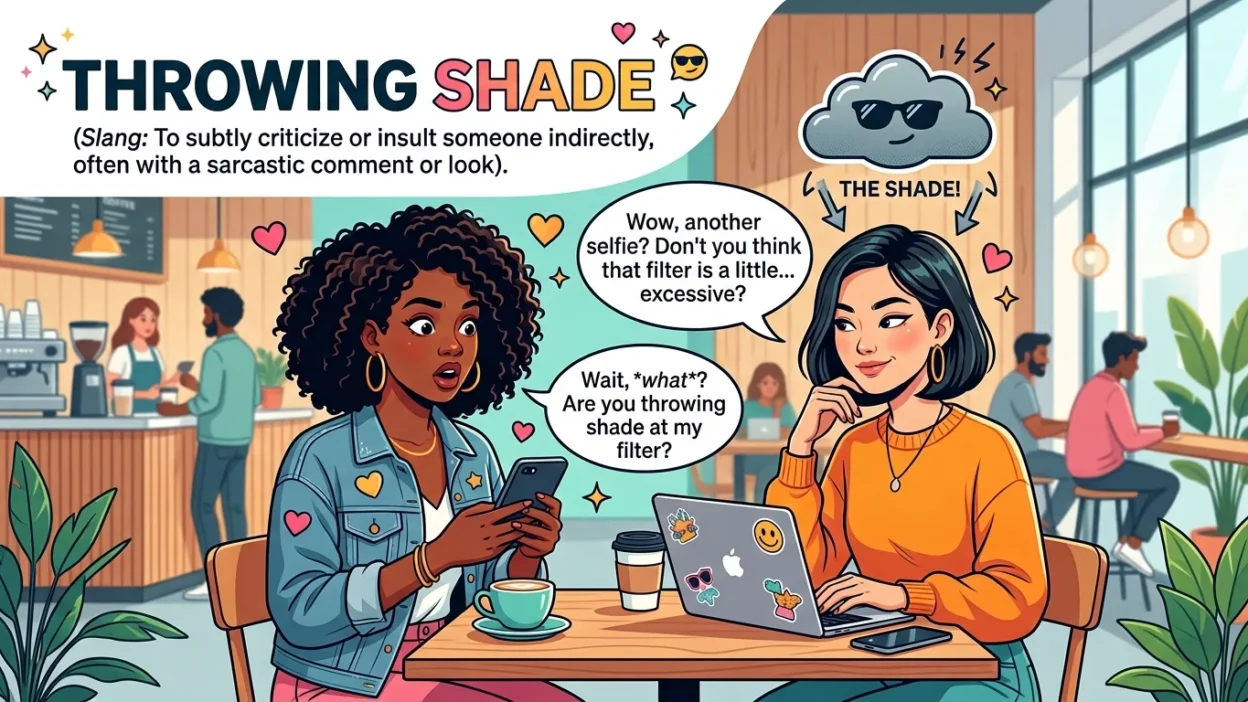
If someone says that another person is “throwing shade,” they usually mean that the person is making a subtle insult, criticism, or disrespectful comment about someone else. The expression is informal slang and is especially common in conversations about social media, friendships, celebrities, relationships, and everyday disagreements.
“Throwing shade” does not usually mean openly insulting someone. Instead, the criticism is often indirect, sarcastic, cleverly worded, or disguised as a casual comment. For example, if someone says, “I would never wear an outfit like that,” while clearly looking at another person’s clothes, they may be throwing shade.
The phrase can describe anything from a playful jab between friends to a pointed public criticism. In this guide, you will learn exactly what “throwing shade” means, where the expression comes from, how to use it naturally, and how it differs from similar expressions such as insulting, mocking, and calling someone out.
Quick Answer
Throwing shade means making a subtle, indirect, or sarcastic criticism or insult toward someone. It is informal slang and is often used when someone makes a negative comment without directly naming or confronting the person they are criticizing.
What Does Throwing Shade Mean?
Throwing shade means indirectly insulting, criticizing, or showing disrespect toward someone.
The expression is usually used when the criticism is not completely direct.
For example:
She was throwing shade at her former coworker during the interview.
This means she was making negative or disrespectful comments about her former coworker, probably without directly confronting or naming them.
The phrase can be serious, humorous, sarcastic, or playful depending on the context.
Why Do People Say “Throwing Shade”?
The word shade in this expression refers to a form of subtle disrespect or criticism.
Instead of openly saying:
“I don’t like her work.”
Someone might say:
“Some people become successful without actually being talented.”
If everyone knows who the comment is about, the speaker is throwing shade.
The criticism is indirect, which is an important part of the expression.
Is Throwing Shade an Insult?
It can be.
Throwing shade usually involves some kind of negative or disrespectful comment, but the expression does not necessarily mean a harsh insult.
It can describe:
• a subtle criticism
• a sarcastic remark
• a clever insult
• a dismissive comment
• an indirect jab
• a playful tease between friends
Context matters.
If two close friends make sarcastic comments about each other, they may jokingly say that they are “throwing shade.” In a serious argument, however, the same phrase can describe genuine hostility.
Throwing Shade Examples
Here are some natural examples of how the expression is used:
- She was throwing shade at her ex on social media.
- Are you throwing shade at me right now?
- He kept throwing shade at his former boss during the interview.
- She threw some serious shade at her rival.
- I wasn’t trying to throw shade at anyone.
- That comment sounded like she was throwing shade.
- They were joking around and throwing shade at each other.
- He threw shade at the new restaurant without mentioning its name.
- Did you hear what she said? She was definitely throwing shade.
- The comedian is known for throwing shade at celebrities.
- She smiled when she said it, but she was clearly throwing shade.
- He posted a vague message that seemed to be throwing shade at his former friend.
- Stop throwing shade and just tell me what you think.
- They spent the entire evening throwing shade at each other.
- Her comment was subtle, but everyone understood that she was throwing shade.
Throwing Shade vs Insulting
These expressions are related, but they are not exactly the same.
Insulting someone usually means directly saying or doing something offensive or disrespectful toward them.
Throwing shade often involves indirect criticism.
For example:
You are terrible at this.
This is a direct insult.
Some people really should not be allowed near a microphone.
This could be throwing shade if everyone understands who the speaker is criticizing.
So, throwing shade is often more indirect and subtle than a straightforward insult.
Throwing Shade vs Mocking
Mocking means making fun of someone or imitating them in a way that shows ridicule or disrespect.
Throwing shade can involve mocking, but it does not have to.
For example:
He copied her accent to make fun of her.
That is mocking.
She said, “At least some people know how to dress professionally.”
That could be throwing shade if she is indirectly criticizing someone’s clothing.
Throwing Shade vs Calling Someone Out
Calling someone out usually means directly confronting or criticizing someone for something they have done.
Throwing shade is often indirect.
Compare:
“You lied to everyone about what happened.”
This is calling someone out.
“It’s interesting how some people suddenly forget what they said yesterday.”
This may be throwing shade.
The first statement directly identifies the problem. The second communicates criticism indirectly.
Throwing Shade vs Being Sarcastic
Sarcasm and throwing shade can overlap.
A sarcastic comment can be a form of shade when it is used to criticize or insult someone.
However, not every sarcastic comment is throwing shade.
For example:
“Great job arriving on time,” said to someone who is two hours late.
This is sarcastic.
If the comment is specifically intended to criticize or embarrass someone, it can also be described as throwing shade.
Can Throwing Shade Be Playful?
Yes.
The expression does not always describe serious hostility.
Friends may throw shade at each other as part of playful banter.
For example:
“You finally learned how to cook?”
If said jokingly between close friends, this could be playful shade.
The tone, relationship, and situation determine whether the comment is genuinely insulting or simply humorous.
Is “Throwing Shade” Positive or Negative?
The expression is generally associated with negative criticism or disrespect, but the seriousness can vary.
Someone might use it humorously:
We were just throwing shade at each other.
Or more seriously:
She has been throwing shade at me all week.
In the first example, the behavior may be playful. In the second, it sounds more hostile.
Throw Shade at Someone
The most common grammatical pattern is:
throw shade at + person
Examples:
She threw shade at her former manager.
He is always throwing shade at his brother.
Don’t throw shade at me.
You can also use throw some shade:
She threw some shade at her competition.
And the noun shade can be used by itself:
That was some serious shade.
Throwing Shade on Social Media
The expression is especially common when discussing social media.
Someone may post a vague message that criticizes another person without mentioning their name.
For example:
“Some people only remember you when they need something.”
If the writer clearly has a particular person in mind, readers might describe the post as throwing shade.
This is sometimes called a subtweet when the criticism is posted indirectly on a platform such as X, although the two expressions are not exact synonyms.
Common Mistakes
1. Thinking Shade Means Literal Darkness
In throwing shade, shade is not being used literally.
The expression refers to criticism, disrespect, or an indirect insult.
2. Assuming It Always Means a Serious Insult
Throwing shade can be playful or humorous.
The context and tone matter.
3. Using It in Formal Writing
“Throwing shade” is informal slang.
In formal writing, alternatives such as criticizing someone, making an indirect criticism, or making a disparaging remark may be more appropriate.
4. Assuming the Person Must Be Named
Someone can throw shade without mentioning the target by name.
The meaning may be obvious from the context.
5. Confusing Shade With Direct Confrontation
Throwing shade is often indirect.
A direct confrontation is more naturally described as calling someone out or confronting someone.
American vs British English
Throwing shade originated in American slang and is especially common in American popular culture and social media.
The expression is also widely understood in British English and other varieties of English because of the influence of American media and internet culture.
In formal British or American writing, however, more neutral expressions may be preferred.
Where Did “Throwing Shade” Come From?
The modern expression is associated with shade as a form of subtle insult or disrespect, particularly in African American and LGBTQ+ cultural traditions.
The term became widely known outside those communities through popular culture, especially through discussions of ballroom culture and the documentary and television series Paris Is Burning.
The expression later became widespread in mainstream internet and social media language.
Because the history of slang can be complex, “throwing shade” should be understood as part of a broader cultural history rather than simply a modern synonym for “insulting.”
Similar Expressions
Depending on the context, these expressions can have related meanings:
Throw a jab: Make a pointed criticism or insult.
Take a dig at someone: Make a critical or insulting remark.
Take a shot at someone: Criticize or attack someone verbally.
Make a snide remark: Make a subtly insulting comment.
Call someone out: Directly criticize someone for their behavior.
Talk trash: Speak disrespectfully or boastfully about someone.
Mock someone: Make fun of someone.
Insult someone: Say or do something offensive toward someone.
Throwing Shade in a Sentence
Here are some additional natural sentence patterns:
Why are you throwing shade at me?
She was throwing shade at her old company.
I wasn’t throwing shade. I was just making an observation.
He threw shade at the other team during the interview.
That post sounds like she is throwing shade.
They were throwing shade at each other all night.
These examples show that the expression can be used in questions, statements, conversations, and social media discussions.
Memory Trick
Think of shade as something that comes from the side rather than directly from the sun.
Likewise, when someone is throwing shade, they are often making criticism indirectly rather than saying exactly what they think.
Throwing shade = throwing an indirect insult or criticism.
A simple memory sentence is:
If someone is criticizing you without saying it directly, they may be throwing shade.
FAQs
What does throwing shade mean in slang?
Throwing shade means making a subtle, indirect, sarcastic, or disrespectful criticism toward someone.
Is throwing shade the same as insulting someone?
Not exactly. An insult can be direct, while throwing shade often involves an indirect or cleverly disguised criticism.
What does it mean when someone says “Are you throwing shade at me?”
They are asking whether your comment was intended as an indirect insult or criticism of them.
Is throwing shade always negative?
Usually it involves criticism or disrespect, but friends can use the expression playfully when joking with each other.
Is throwing shade rude?
It can be rude because it often involves criticism or disrespect. However, the seriousness depends on the context and tone.
Is throwing shade formal English?
No. It is informal slang and is generally better suited to casual conversation, social media, and informal writing.
What is another word for throwing shade?
Depending on the context, alternatives include criticizing, taking a dig, making a snide remark, throwing a jab, mocking, or calling someone out.
What is the difference between throwing shade and calling someone out?
Throwing shade is often indirect, while calling someone out usually means directly confronting or criticizing someone about their behavior.
Final Verdict
Throwing shade means making an indirect, subtle, sarcastic, or disrespectful criticism toward someone. It is informal slang and is commonly used in conversations about social media, friendships, celebrities, and personal disagreements.
The key idea is indirect criticism. If someone makes a negative comment without openly confronting the person they are criticizing, people may describe it as throwing shade.
Conclusion
The slang expression “throwing shade” is used when someone makes a subtle or indirect criticism, insult, or disrespectful remark. It can be serious, sarcastic, humorous, or playful depending on the situation. The phrase is especially common in American informal English and online conversations.
Remember that throwing shade is not necessarily the same as directly insulting someone. A direct insult openly attacks someone, while throwing shade often leaves the criticism between the lines. That indirect quality is what makes the expression so recognizable in modern slang.
Remember This
Throwing shade = making an indirect criticism or insult.
If someone is taking a subtle jab at another person without directly confronting them, they may be throwing shade.

Christopher Thomas is a passionate writer and dream researcher dedicated to exploring the meanings behind dreams. As an author at DrameyHut, he creates insightful and easy-to-understand interpretations that help readers connect with their subconscious mind. His work focuses on guiding individuals toward self-discovery, clarity, and a deeper understanding of their inner thoughts.