Verbs that start with Z are relatively rare in English, but they are still useful in everyday conversations, academic writing, science, technology, and creative expression. From common verbs like zoom and zip to advanced words like zero, zigzag, and zombify, these action words can make your vocabulary more interesting and expressive.
If you’re expanding your vocabulary, preparing for exams, improving your writing, or simply looking for verbs that start with Z, this guide provides meanings, examples, and practical tips to help you use them confidently.
Quick Answer
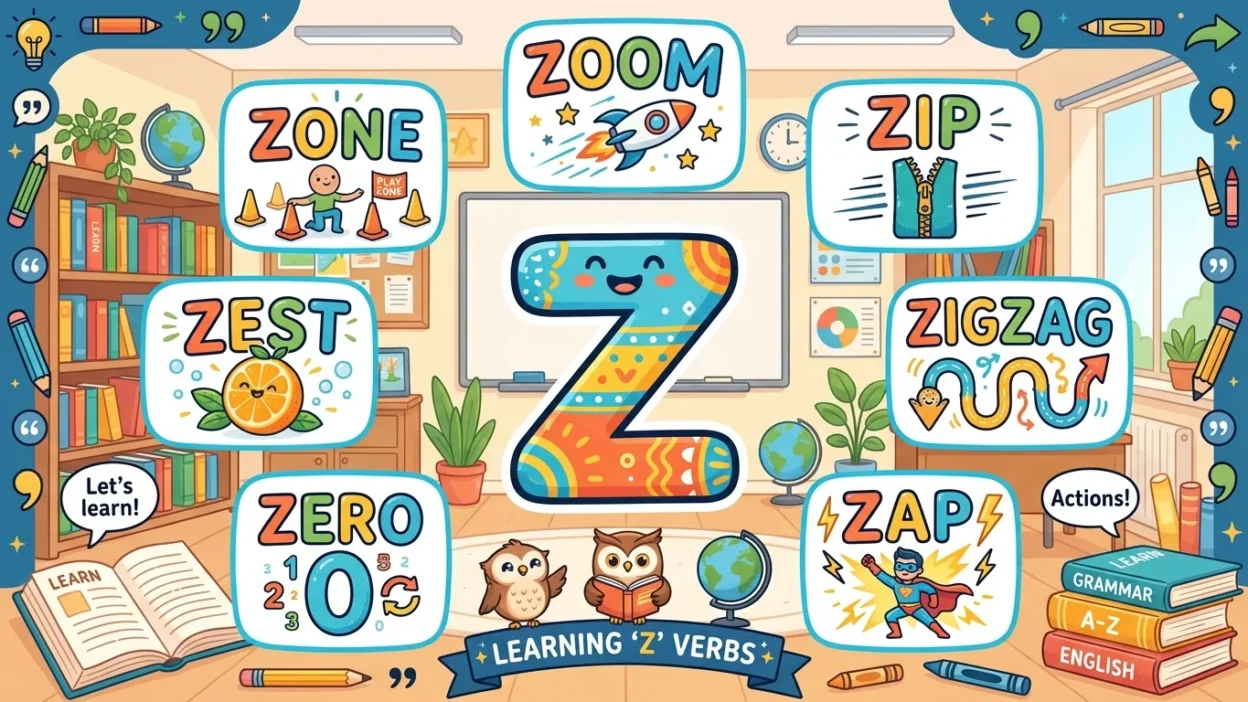
Verbs that start with Z are action or state words beginning with the letter Z. Common examples include zoom, zip, zigzag, zero, zone, zest, zombify, and zap.
Why Learn Verbs That Start With Z?
Learning Z verbs can help you:
- Expand your English vocabulary.
- Improve creative writing.
- Enhance speaking and communication skills.
- Prepare for vocabulary quizzes and exams.
- Use more varied and engaging language.
Common Verbs That Start With Z
Here are some of the most commonly used verbs beginning with Z.
- Zoom
- Zip
- Zigzag
- Zero
- Zone
- Zap
- Zing
- Zest
- Zoom in
- Zoom out
- Zipper
- Zig
- Zag
- Zonk
- Zombify
Positive Verbs That Start With Z
These verbs can add energy and positivity to your writing.
- Zoom
- Zest
- Zing
- Zap
- Zero in
- Zone in
- Zip
Action Verbs That Start With Z
These verbs describe physical or mental actions.
- Zip
- Zoom
- Zigzag
- Zap
- Zero
- Zing
- Zonk
- Zone
- Zig
- Zag
Business and Technology Verbs That Start With Z
These verbs are commonly used in professional or digital contexts.
- Zoom
- Zip
- Zero
- Zone
- Zoom in
- Zoom out
- Zip up
- Zero out
Advanced Verbs That Start With Z
Expand your vocabulary with these higher-level verbs.
- Zombify
- Zero
- Zigzag
- Zing
- Zap
- Zone
- Zest
- Zonk
- Zero out
- Zoom
Comparison Table
| Verb | Meaning | Example Sentence |
|---|---|---|
| Zoom | To move quickly or enlarge a view | The camera zoomed in on the bird. |
| Zip | To fasten or move quickly | She zipped her jacket. |
| Zigzag | To move in sharp turns | The rabbit zigzagged across the field. |
| Zap | To destroy or hit suddenly | The microwave zapped the leftovers. |
| Zero | To adjust to zero or eliminate | Engineers zeroed the instrument. |
| Zone | To divide into areas | The city zoned the land for housing. |
| Zing | To move quickly or make a sharp sound | The tennis ball zinged past him. |
| Zombify | To make someone act like a zombie | Lack of sleep can zombify anyone. |
| Zest | To add citrus peel | She zested a lemon for the recipe. |
| Zonk | To knock unconscious or exhaust | The long hike zonked us out. |
Examples in Sentences
- The airplane zoomed across the sky.
- Please zip your backpack.
- The cyclist zigzagged through traffic.
- She zested the orange before baking.
- The camera zoomed in on the speaker.
- He zapped the insects with an electric racket.
- The surveyor zeroed the measuring equipment.
- The tennis ball zinged over the net.
- The movie almost zombified the audience with boredom.
- The hikers were zonked after climbing the mountain.
- The council zoned the area for commercial use.
- We zipped through the city before sunset.
Common Mistakes
Many learners make these mistakes.
- Thinking there are no English verbs beginning with Z.
- Confusing zip with the noun zip.
- Using zest only as a noun, even though it is also a verb.
- Assuming zoom only refers to video calls.
Correct:
- She zipped her coat.
Incorrect:
- She zip her coat yesterday.
Memory Trick
Remember this simple phrase:
Z is for Zoom, Zip, and Zigzag.
These are three of the easiest and most frequently used Z verbs in everyday English.
American vs British English
Most verbs beginning with Z have the same meanings and usage in both American and British English.
The main differences are related to pronunciation rather than grammar or spelling.
Similar Words
You may also want to learn:
- Action verbs
- Helping verbs
- Linking verbs
- Irregular verbs
- Regular verbs
- Phrasal verbs
- Dynamic verbs
- Transitive verbs
- Intransitive verbs
- Strong verbs
Final Verdict
Although verbs that start with Z are less common than those beginning with other letters, they are valuable additions to your English vocabulary. Words like zoom, zip, zigzag, and zap appear in everyday conversations, while verbs such as zest, zero, and zombify can enrich your writing with more precise and expressive language.
Learning even a few Z verbs can make your vocabulary more diverse and help you communicate with greater confidence.
Remember This
Start with these five easy Z verbs:
- Zoom
- Zip
- Zigzag
- Zap
- Zero
Master these first, then gradually add more advanced Z verbs to your vocabulary.
FAQs
What are verbs that start with Z?
They are action or state words beginning with the letter Z, such as zoom, zip, zigzag, and zap.
What is the most common verb that starts with Z?
Zoom is one of the most common and widely used Z verbs.
Is zip a verb?
Yes. Zip means to fasten with a zipper or to move quickly.
Is zest a verb?
Yes. Zest means to scrape the outer peel from a citrus fruit.
Are there many English verbs that start with Z?
No. Compared to other letters, English has relatively few verbs that begin with Z.
Which Z verbs are useful in everyday English?
Useful everyday verbs include zoom, zip, zap, zero, and zigzag.
How can I remember Z verbs?
Use the phrase Zoom, Zip, Zigzag and practise using these verbs in daily conversations and writing.
Conclusion
While the letter Z may not offer as many verbs as other letters, it still includes a variety of useful action words for everyday English, business, technology, and creative writing. Learning these verbs will help you expand your vocabulary and express yourself more precisely.
The best way to remember Z verbs is to use them regularly in sentences and conversations. With consistent practice, words like zoom, zip, zigzag, and zero will become a natural part of your English vocabulary.

Nancy Lisa is a passionate writer and contributor at DrameyHut, focused on uncovering the deeper meanings behind dreams. She creates engaging and insightful content that helps readers interpret their dreams and understand their subconscious thoughts. Her work inspires self-reflection, clarity, and a stronger connection to inner emotions.