
Many English learners wonder whether well wishes is a correct expression. Since phrases like best wishes, warm wishes, and good wishes are common, it’s easy to be unsure about when and how to use well wishes.
The good news is that well wishes is a correct English expression. However, it is used differently from best wishes and isn’t always the most natural choice in every situation.
Quick Answer
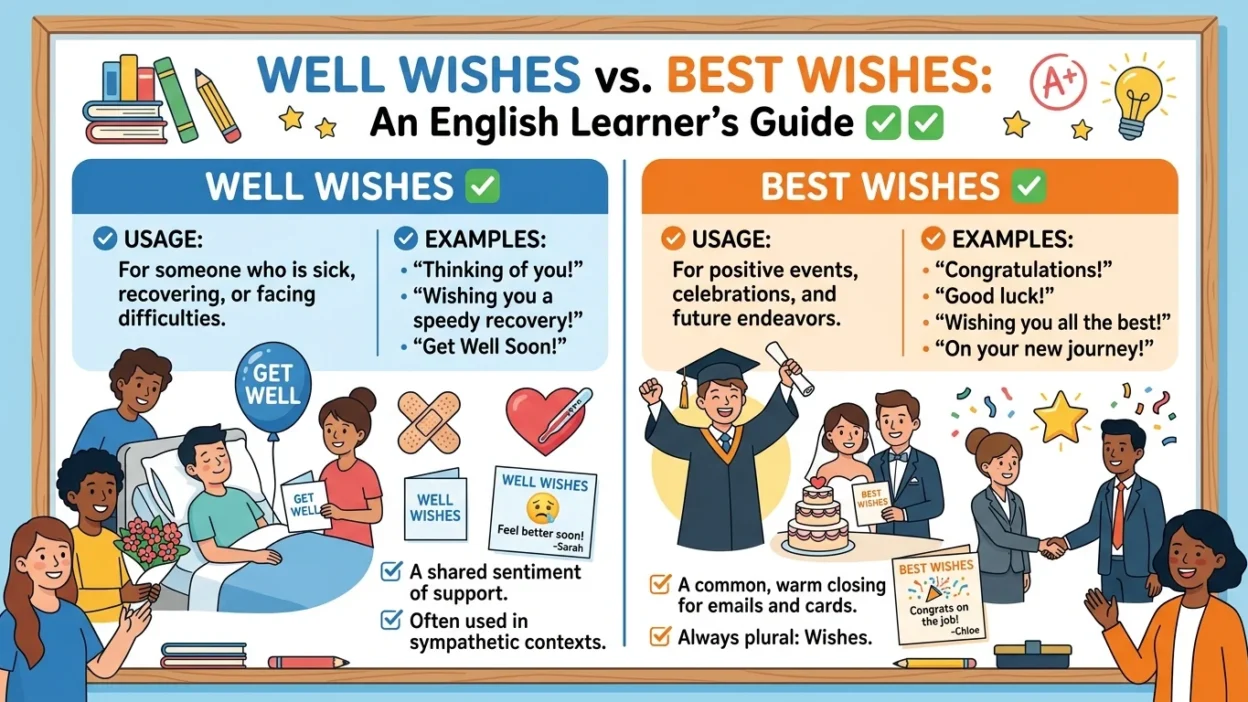
Well wishes is a correct English noun phrase that means kind, sincere, or positive wishes for someone’s health, happiness, or success. It is most commonly used when sending or expressing good intentions, while best wishes is more commonly used to end letters, emails, and greeting cards.
Why People Confuse It
The confusion happens because several expressions have similar meanings, including:
- Well wishes
- Best wishes
- Good wishes
- Warm wishes
Among these, best wishes is far more common as a closing in written communication, while well wishes usually refers to the wishes themselves.
Well Wishes
Well wishes is a plural noun phrase.
Meaning
It refers to:
- Expressions of kindness.
- Messages of support.
- Hopes for someone’s happiness, recovery, or success.
Examples
- We send our well wishes to your family.
- Please accept my well wishes for a speedy recovery.
- She received well wishes from friends around the world.
- Our well wishes are with you during this difficult time.
- Thank you for your kind well wishes.
Best Wishes
Best wishes is another noun phrase.
Meaning
It is commonly used as:
- A closing in letters and emails.
- A way to express hope for someone’s future success or happiness.
Examples
- Best wishes for your new job.
- Wishing you all the best.
- Best wishes,
- We send our best wishes to the newlyweds.
- Best wishes on your graduation.
Comparison Table
| Feature | Well Wishes | Best Wishes |
|---|---|---|
| Correct English | ✅ Yes | ✅ Yes |
| Means kind or positive wishes | ✅ Yes | ✅ Yes |
| Common as an email closing | ❌ Rarely | ✅ Yes |
| Used in sympathy or recovery messages | ✅ Very common | ✅ Common |
| Common in everyday conversation | ✅ Yes | ✅ Yes |
When to Use Each
Use well wishes when:
- Referring to messages of support.
- Talking about recovery from illness.
- Expressing sympathy or encouragement.
- Describing kind thoughts from others.
Use best wishes when:
- Ending an email or letter.
- Congratulating someone.
- Sending greetings for future success.
Examples
- Please accept my well wishes for a speedy recovery.
- She appreciated everyone’s well wishes.
- We sent our well wishes after hearing the news.
- His family received thousands of well wishes.
- Thank you for your thoughtful well wishes.
- Best wishes on your retirement.
- Best wishes for your new adventure.
- I wish you success and happiness. Best wishes!
- We extend our best wishes to the happy couple.
- Best wishes on your graduation.
- Our well wishes are always with you.
- He thanked everyone for their well wishes.
Common Mistakes
Many learners make these errors.
- Using well wishes as an email sign-off.
- Assuming well wishes and best wishes are always interchangeable.
- Writing well wish when referring to multiple greetings.
Correct:
- Thank you for your well wishes.
- Best wishes, Sarah.
Less natural:
- Well wishes, Sarah.
Memory Trick
Remember this simple rule:
Well wishes = The kind messages.
Best wishes = The way you end a letter or email.
If you’re signing off, choose best wishes.
If you’re talking about supportive messages, choose well wishes.
American vs British English
There is no major difference between American and British English.
Both varieties use well wishes for expressions of support and best wishes as a common closing in letters and emails.
Similar Words
You may also confuse these expressions:
- Best Wishes vs Kind Regards
- Warm Wishes vs Best Wishes
- Good Luck vs Best Wishes
- Congratulations vs Best Wishes
- Kind Regards vs Regards
- Sincerely vs Best Wishes
- Get Well Soon vs Well Wishes
- Heartfelt Wishes vs Warm Wishes
- Good Wishes vs Well Wishes
- Farewell vs Best Wishes
Final Verdict
Well wishes is a correct expression used to describe kind thoughts, encouragement, or messages of support for someone’s health, happiness, or success. Best wishes, however, is the more natural choice when ending emails, letters, or greeting cards.
Knowing the difference will help you choose the right expression for both personal and professional communication.
Remember This
Well wishes = Kind thoughts or supportive messages. ✅
Best wishes = Common email or letter closing. ✅
Use well wishes when referring to the wishes, and best wishes when signing off.
FAQs
Is “well wishes” grammatically correct?
Yes. Well wishes is a correct English expression meaning kind or supportive wishes.
What does “well wishes” mean?
It refers to expressions of goodwill, support, or hopes for someone’s health, happiness, or success.
Can I end an email with “well wishes”?
You can, but best wishes is much more common and natural as an email closing.
Is “best wishes” better than “well wishes”?
It depends on the context. Best wishes is better as a sign-off, while well wishes is better when referring to messages of support.
Can I say “thank you for your well wishes”?
Yes. This is a very common and natural expression.
Do British and American English use “well wishes” differently?
No. Both varieties use it in the same way.
What is another way to say “well wishes”?
You can say good wishes, kind wishes, warm wishes, goodwill, or words of encouragement, depending on the context.
Conclusion
The phrase well wishes is perfectly correct and is commonly used to describe kind thoughts, encouragement, or supportive messages sent to someone during important moments, illnesses, or celebrations. It is especially appropriate when thanking people for their kindness or expressing hope for someone’s well being.
While well wishes and best wishes both express goodwill, they are not always interchangeable. Best wishes is the preferred closing for letters and emails, whereas well wishes is best used when talking about the supportive messages themselves.

Daniel Charles is a dedicated author and dream interpretation enthusiast at DrameyHut. He specializes in analyzing dream symbols and meanings, offering clear and insightful content for readers. His work aims to help individuals understand their subconscious thoughts, gain clarity, and explore the deeper messages hidden within their dreams.