
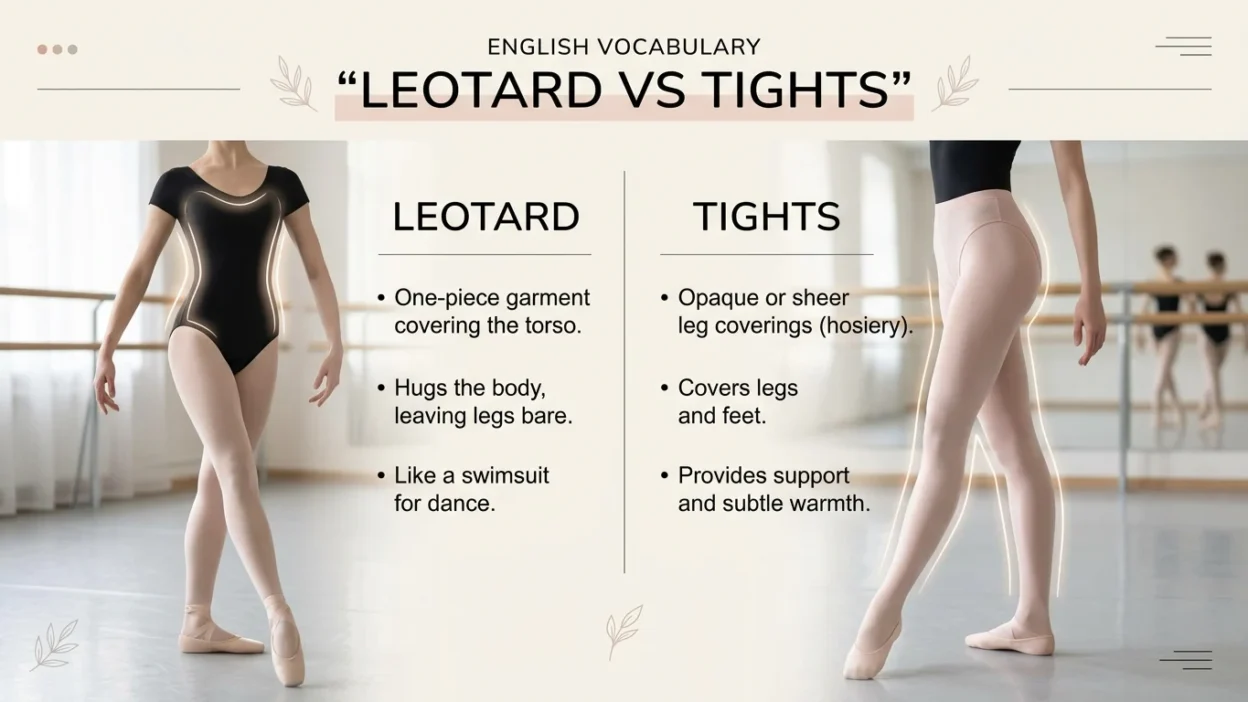
If you are new to ballet, gymnastics, dance, or stage performance, the terms leotard and tights can be confusing. Both are closely associated with dancewear and performance clothing, and they are often worn together. However, they are not the same type of garment.
A leotard is a close fitting, one piece garment that covers the torso and usually leaves the legs exposed. Tights, on the other hand, are close fitting garments that cover the legs and usually extend from the waist down to the feet or ankles. They can be worn separately or underneath a leotard, depending on the activity and dress code.
Understanding the difference is useful when shopping for dancewear, choosing a ballet outfit, or following a studio’s clothing requirements. In this guide, we will explain what leotards and tights are, how they differ, when to use each, and whether you can wear them together.
Quick Answer
A leotard is a one piece garment covering the torso and hips, while tights cover the legs. Leotards are common in ballet, gymnastics, and dance. Tights can be worn with leotards or other clothing. In many dance outfits, a leotard and tights are worn together.
Why People Confuse Leotards and Tights
The confusion comes from the fact that both garments are strongly associated with ballet, dance, gymnastics, and other performance activities.
They are also both usually made from stretchy materials and fit closely against the body.
However, their main difference is simple:
A leotard covers the torso. Tights cover the legs.
A dancer might wear both at the same time:
She wore a black leotard with pink tights.
In this sentence, the two garments serve different purposes.
What Is a Leotard?
A leotard is a close fitting, one piece garment that covers the torso and extends over the hips. Depending on the design, it may have short sleeves, long sleeves, or no sleeves.
Leotards are especially common in:
- Ballet
- Gymnastics
- Dance
- Figure skating
- Acrobatics
- Theater and stage performance
- Other athletic or performing arts activities
A leotard usually leaves the legs uncovered.
For example:
The gymnast wore a blue leotard during the competition.
A leotard can also be worn with tights, leggings, shorts, or other garments.
Common Types of Leotards
Leotards come in many designs, including:
Sleeveless leotard: Leaves the shoulders and arms uncovered.
Short sleeve leotard: Covers part of the upper arms.
Long sleeve leotard: Covers the arms and is often useful in colder environments.
Tank leotard: Has wider shoulder straps and a sleeveless design.
Mock neck leotard: Has a higher neckline.
The exact design depends on the activity and the wearer’s preference.
What Are Tights?
Tights are close fitting garments designed primarily to cover the legs. They generally extend from the waist downward.
Depending on the style, tights may cover:
- The entire foot
- The ankle
- Part of the foot
- The legs while leaving the feet exposed
Tights are commonly worn for:
- Ballet
- Dance
- Theater
- Exercise
- Figure skating
- Costumes
- Everyday fashion
For example:
The ballet students wore pink tights for class.
Unlike a leotard, tights do not normally cover the torso.
Leotard vs Tights: Comparison Table
| Feature | Leotard | Tights |
|---|---|---|
| Main coverage | Torso and hips | Legs |
| Basic design | One piece | Leg covering |
| Covers the torso | Yes | No |
| Covers the legs | Usually no | Yes |
| Common in ballet | Yes | Yes |
| Common in gymnastics | Yes | Sometimes |
| Can be worn alone | Yes, depending on activity | Sometimes |
| Can be worn together | Yes | Yes |
| Main purpose | Covers and supports the torso | Covers the legs |
| Typical fit | Close fitting | Close fitting |
The easiest way to remember the difference is:
Leotard = torso
Tights = legs
Leotard and Tights Together
A leotard and tights are frequently worn together, especially in ballet and other forms of dance.
For example:
The dancer wore a black leotard and pink tights.
The leotard provides coverage for the upper body, while the tights cover the legs.
This combination also creates a streamlined outfit that allows teachers and instructors to see the body’s alignment and movement.
Depending on the activity, tights may be worn under or over a leotard.
For example:
The dancer wore pink tights over her black leotard.
The exact arrangement depends on the style of tights, the dress code, and the particular dance tradition.
When to Wear a Leotard
A leotard is appropriate when you need a close fitting garment that covers the torso without covering the legs.
Common situations include:
Ballet classes
Many ballet schools require or recommend leotards as part of a standard uniform.
Gymnastics
Gymnasts commonly wear specialized leotards designed for movement and performance.
Dance performances
Leotards can be part of costumes or rehearsal clothing.
Figure skating
Skaters may wear leotard style costumes or closely related performance garments.
Acrobatics
A close fitting one piece garment can make movement easier and reduce loose clothing getting in the way.
When to Wear Tights
Tights are useful when you want additional coverage for the legs.
For example, dancers may wear tights during:
- Ballet classes
- Dance rehearsals
- Stage performances
- Theater productions
- Figure skating
- Exercise
- Costume performances
Tights can also provide warmth and create a consistent appearance among performers.
Can You Wear a Leotard Without Tights?
Yes.
A leotard can be worn without tights, depending on the activity, dress code, temperature, and personal preference.
For example:
She practiced gymnastics in a leotard without tights.
In ballet, however, a studio may require tights as part of its dress code.
So whether tights are necessary is not determined by the definition of a leotard. It depends on the situation.
Can You Wear Tights Without a Leotard?
Yes.
Tights do not require a leotard.
They can be worn with:
- Dresses
- Skirts
- Tunics
- Shorts
- Costumes
- Other clothing
For example:
She wore black tights with a dress.
In dance, however, tights are often paired with a leotard.
Leotard vs Bodysuit
A leotard and a bodysuit can look similar because both are one piece garments covering the torso.
The difference is usually based on intended use and design.
A leotard is strongly associated with dance, gymnastics, performance, and athletic movement.
A bodysuit is often used as a fashion garment and may be designed to be worn with trousers, skirts, or other everyday clothing.
For example:
The gymnast wore a leotard.
She wore a bodysuit with jeans.
There can be considerable overlap in appearance, so context is important.
Leotard vs Swimsuit
A leotard can also resemble a one piece swimsuit.
However, they are designed for different purposes.
A swimsuit is specifically designed for swimming and water activities. It is made from materials suitable for use in water.
A leotard is designed for activities such as dance, gymnastics, and performance.
Even when the two garments look similar, they are not interchangeable in every situation.
Tights vs Leggings
Tights and leggings both cover the legs, but they are not exactly the same.
Tights are generally thinner, more closely fitted, and often associated with dance, costumes, fashion, and hosiery.
Leggings are usually thicker and more substantial and are often worn as everyday clothing or athletic wear.
For example:
The ballet dancer wore tights.
She wore leggings while exercising.
There is some overlap, but tights are generally more hosiery like, while leggings are usually more substantial.
Examples of “Leotard”
- She wore a black leotard to ballet class.
- The gymnast chose a bright red leotard for the competition.
- Her dance school requires students to wear a leotard.
- The child practiced in a comfortable cotton leotard.
- The costume included a blue leotard.
- She bought a long sleeve leotard for winter classes.
- The instructor asked everyone to wear a plain leotard.
- The performer changed into a decorated leotard before the show.
- The gymnast’s leotard was designed for maximum freedom of movement.
- She wore a sleeveless leotard during rehearsal.
Examples of “Tights”
- She wore pink tights to ballet class.
- The dancer bought a new pair of tights.
- The costume included black tights.
- The children wore matching tights for the performance.
- She put on her tights before putting on her ballet shoes.
- The ballet school requires students to wear tights.
- These tights are comfortable enough for long rehearsals.
- The dancer wore tights underneath her costume.
- She chose footless tights for the performance.
- The theater company provided tights for the performers.
Common Mistakes
Mistake 1: Calling a leotard “tights”
These are different garments.
❌ She wore black tights that covered her torso.
If the garment covers the torso and hips as a one piece outfit, leotard is usually the appropriate word.
Mistake 2: Calling tights a leotard
Tights primarily cover the legs.
❌ He bought a new leotard for his legs.
✅ He bought a new pair of tights.
Mistake 3: Assuming dancers must wear both
A leotard and tights are often worn together, but they are separate garments and do not always have to be worn together.
Mistake 4: Treating tights and leggings as identical
Although they overlap, tights are generally thinner and more hosiery like, while leggings are usually thicker.
Mistake 5: Assuming every leotard has the same design
Leotards can be sleeveless, short sleeved, long sleeved, high necked, low backed, or designed in many other ways.
Memory Trick
Use this simple trick:
Leotard = upper body
Tights = legs
Think of a dancer getting dressed:
Leotard first for the torso, tights for the legs.
And remember that they can be worn together:
leotard + tights = a common dance outfit
American vs British English
The words leotard and tights are used in both American and British English.
However, tights can sometimes refer to slightly different clothing categories depending on the variety of English and context.
In American English, tights commonly refers to close fitting legwear worn under dresses, skirts, costumes, or as dancewear.
In British English, tights is also the standard word for this type of legwear.
The word leotard is likewise widely understood in both varieties.
There is therefore no major American versus British spelling difference for leotard or tights.
Similar Words
Bodysuit
A one piece garment covering the torso, often used in fashion.
Unitard
A one piece garment that covers both the torso and the legs.
This is particularly useful for remembering the distinction:
Leotard = torso
Unitard = torso + legs
Leggings
Close fitting legwear that is generally thicker than tights.
Stockings
Leg coverings that typically extend to the thighs or higher and may be held up separately.
Dancewear
A general term for clothing designed for dancers, including leotards, tights, skirts, warmups, and other garments.
Is a Leotard the Same as Tights?
No. A leotard and tights are different garments.
A leotard covers the torso and hips, while tights cover the legs.
They are often worn together, especially in ballet and dance, which is why the terms can sometimes be confused.
Is a Leotard the Same as a Unitard?
No.
A leotard generally leaves the legs uncovered, whereas a unitard is a one piece garment that covers the torso and legs.
The distinction is mainly about how much of the body the garment covers.
Are Tights Part of a Leotard?
Normally, no.
A standard leotard and a pair of tights are separate garments.
However, some specialized garments may combine features of different types of dancewear, so a particular product can vary in design.
FAQs
What is the main difference between a leotard and tights?
A leotard covers the torso and hips, while tights cover the legs. They are separate garments but are often worn together.
Do dancers wear leotards and tights together?
Yes. Wearing a leotard with tights is a very common dance outfit, particularly in ballet.
Can you wear a leotard without tights?
Yes. Whether tights are required depends on the activity, dress code, temperature, and personal preference.
Can you wear tights without a leotard?
Yes. Tights can be worn with dresses, skirts, shorts, costumes, and other clothing.
Are leggings the same as tights?
No. Leggings are generally thicker and more substantial, while tights are usually thinner and more hosiery like.
What is a unitard?
A unitard is a one piece garment that generally covers both the torso and the legs. Unlike a typical leotard, it does not leave the legs exposed.
Are leotard and tights the same in American and British English?
Yes. Both terms are commonly used in American and British English, although specific clothing preferences and terminology can vary by context.
Final Verdict
Leotard and tights are not the same thing.
A leotard is a close fitting one piece garment that covers the torso and hips, while tights are close fitting garments that cover the legs.
They are often used together in ballet, dance, gymnastics, and performance settings. That is why you may frequently hear both words when discussing dancewear.
The easiest rule is:
Leotard = torso
Tights = legs
Once you remember that distinction, it becomes much easier to understand descriptions of dance clothing and choose the right term.
Conclusion
The difference between leotard and tights is mainly about coverage. A leotard covers the upper body and hips, while tights cover the legs. They are separate garments, but they can be combined to create a complete dance or performance outfit.
If you are learning English or shopping for dancewear, remember that a leotard is the one piece garment worn on the torso, whereas tights are the close fitting legwear. And if you see someone wearing both, that is perfectly normal: the leotard and tights simply perform different roles in the outfit.
Remember This
Leotard = torso and hips
Tights = legs
Leotard + tights = common dancewear combination
The simplest rule is:
A leotard covers the body; tights cover the legs.

Daniel Charles is a dedicated author and dream interpretation enthusiast at DrameyHut. He specializes in analyzing dream symbols and meanings, offering clear and insightful content for readers. His work aims to help individuals understand their subconscious thoughts, gain clarity, and explore the deeper messages hidden within their dreams.