“Mom” and “mum” have the same basic meaning, but the spelling depends mainly on the variety of English you are using. Both words are affectionate terms for a female parent, and neither is grammatically more correct than the other.
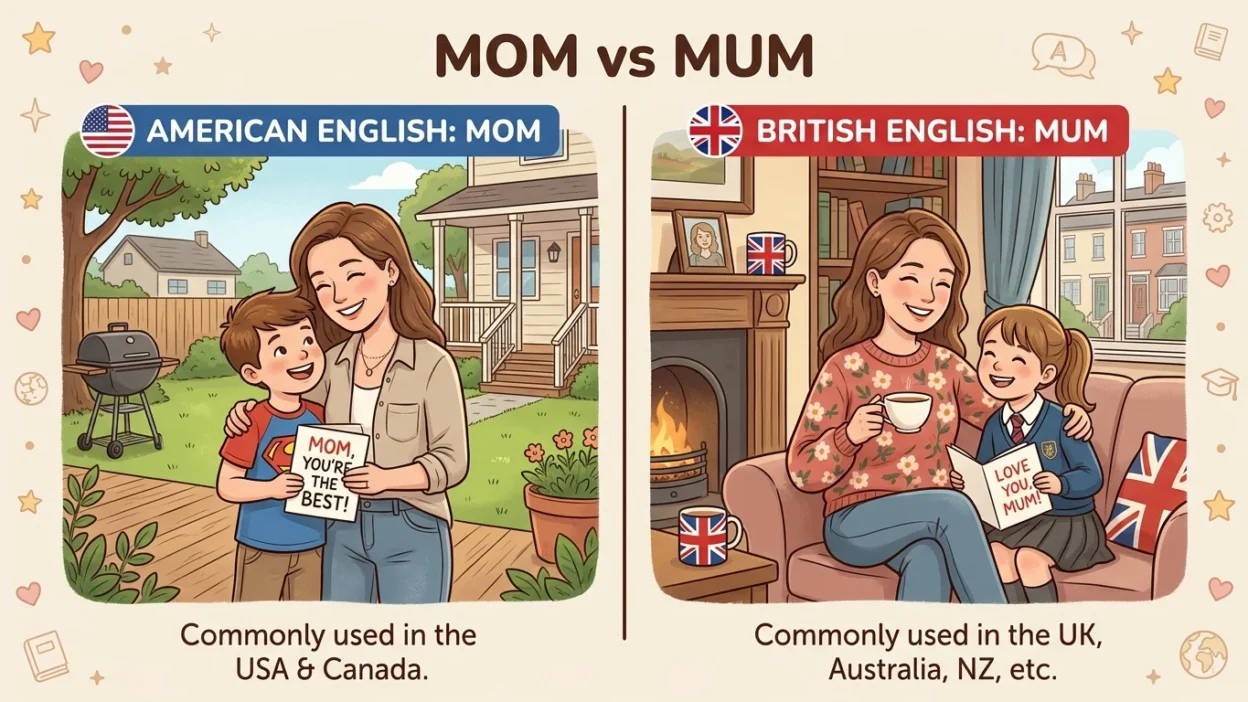
The main difference is regional. Mom is the standard form in American English, while mum is the standard form in British English and is also common in other varieties influenced by British English.
This difference can be confusing for English learners because both words refer to the same person and are pronounced similarly in most contexts. If you are writing for an American audience, choose “mom.
” If you are writing for a British audience, “mum” is usually the better choice.
Quick Answer
Mom is mainly American English, while mum is mainly British English. Both mean a mother and can be used as affectionate, informal terms. For example, Americans usually say “My mom is a teacher,” while British speakers usually say “My mum is a teacher.”
Why People Confuse It
People often confuse “mom” and “mum” because they have the same meaning and very similar pronunciation.
The difference is primarily based on regional English. American English generally uses “mom,” while British English generally uses “mum.”
You may also see “mummy” and “mommy,” which follow the same general regional distinction.
Mom
Mom is the standard informal word for “mother” in American English.
It is commonly used in everyday conversation, personal writing, and family situations.
Examples:
- My mom made dinner tonight.
- I called my mom after work.
- My mom is visiting us this weekend.
- Mom, can you help me with this?
- I bought a gift for my mom.
- My mom taught me how to cook.
In American English, “mom” is completely natural and very common.
Mom or Mother?
“Mother” is more formal or neutral, while “mom” is more personal and conversational.
For example:
My mother is a doctor.
My mom is a doctor.
Both are correct, but “mom” sounds more familiar and informal.
Mum
Mum is the standard informal word for “mother” in British English.
It is also widely used in countries and regions where British English has traditionally influenced spelling and vocabulary.
Examples:
- My mum made dinner tonight.
- I called my mum yesterday.
- My mum is coming to visit.
- Mum, can you help me?
- I bought a present for my mum.
- My mum taught me how to drive.
In British English, “mum” is the natural everyday choice.
Mum or Mother?
Just like “mom,” “mum” is more informal and personal than “mother.”
For example:
My mother lives in London.
My mum lives in London.
Both are grammatically correct. The second sounds more conversational.
Comparison Table
| Word | Main variety | Meaning | Example |
|---|---|---|---|
| Mom | American English | Mother | My mom is at home. |
| Mum | British English | Mother | My mum is at home. |
| Mother | All major varieties | Female parent | My mother is at home. |
| Mommy | Mainly American English | Affectionate form of mother | Mommy, look at this! |
| Mummy | Mainly British English | Affectionate form of mother | Mummy, look at this! |
When to Use Each
Use mom when writing or speaking in American English.
My mom works at a hospital.
Use mum when writing or speaking in British English.
My mum works at a hospital.
The choice is usually about regional spelling rather than meaning.
If your website, school, business, or publication follows American English, use “mom” consistently. If it follows British English, use “mum.”
Examples of Mom and Mum
Here are some examples showing how the two forms work in sentences.
- My mom is making breakfast.
American English - My mum is making breakfast.
British English - I love my mom very much.
American English - I love my mum very much.
British English - Mom, where are my keys?
American English - Mum, where are my keys?
British English - My mom called me this morning.
American English - My mum called me this morning.
British English - I am going shopping with my mom.
American English - I am going shopping with my mum.
British English - Her mom gave her some advice.
American English - Her mum gave her some advice.
British English
Common Mistakes
1. Thinking one spelling is incorrect
Neither “mom” nor “mum” is incorrect.
The spelling depends on the variety of English.
2. Mixing regional styles unnecessarily
If you are writing an American English article, using “mum” may look inconsistent.
Likewise, British English writing normally uses “mum.”
3. Confusing mum with another meaning
“Mum” can have another meaning in British English. As an adjective or noun related to silence, it appears in expressions such as keep mum, meaning to remain silent or keep something secret.
For example:
She kept mum about the surprise.
Here, “mum” does not mean mother.
4. Assuming “mom” is always more correct
“Mom” is not more correct than “mum.” It is simply the preferred spelling in American English.
Memory Trick
A simple way to remember the difference is:
Mom = American English
Mum = British English
Think of the o in “mom” as the American choice and the u in “mum” as the British choice.
The meaning stays the same.
American vs British English
The clearest difference is regional usage.
American English: mom
British English: mum
For example:
American: My mom is coming over.
British: My mum is coming over.
Both sentences mean exactly the same thing.
The same regional pattern can also appear in related words:
American: mommy
British: mummy
There can be differences among other English speaking regions, but “mom” and “mum” are strongly associated with American and British English respectively.
Similar Words
Several other words can refer to a mother or be used as affectionate alternatives.
Mother: More formal or neutral.
Mom: Informal American English.
Mum: Informal British English.
Mommy: More childlike or affectionate American English.
Mummy: More childlike or affectionate British English.
Mama: An affectionate form used in many varieties of English.
The appropriate choice depends on region, age, family preference, and tone.
Final Verdict
Mom and mum are both correct. They have the same basic meaning, but they belong to different varieties of English.
Use mom in American English and mum in British English. If you are writing for a specific audience, consistency is more important than choosing one spelling as universally correct.
FAQs
Is “mom” American or British?
“Mom” is primarily the standard informal term for mother in American English.
Is “mum” British or American?
“Mum” is primarily the standard informal term for mother in British English.
Are mom and mum pronounced the same?
They are pronounced similarly, although pronunciation can vary by accent. In many common accents, they are effectively homophones.
Is “mum” a correct spelling?
Yes. “Mum” is the standard spelling in British English.
Is “mom” a correct spelling?
Yes. “Mom” is the standard spelling in American English.
Can I use “mum” in American English?
You can, especially when referring to British usage or a person who uses that form, but “mom” is the normal American English choice.
Which is more formal, mom or mum?
Neither is more formal. Both are informal terms for “mother.” “Mother” is generally the more formal or neutral term.
Conclusion
The difference between mom and mum is mainly a difference in regional English. Americans generally use “mom,” while British speakers generally use “mum.” Both words are perfectly correct within their respective varieties of English.
When choosing between them, think about your audience and maintain consistency. If you are writing in American English, choose “mom.” If you are writing in British English, choose “mum.” Most importantly, remember that the meaning does not change.
Remember This
Mom = American English
Mum = British English
Both mean mother, and both are correct.

Daniel Charles is a dedicated author and dream interpretation enthusiast at DrameyHut. He specializes in analyzing dream symbols and meanings, offering clear and insightful content for readers. His work aims to help individuals understand their subconscious thoughts, gain clarity, and explore the deeper messages hidden within their dreams.