Specter and spectre are two spellings of the same word. Both refer to a ghost, apparition, or frightening supernatural figure. The word can also be used figuratively for something unpleasant or threatening that seems to hang over a person, group, or situation.
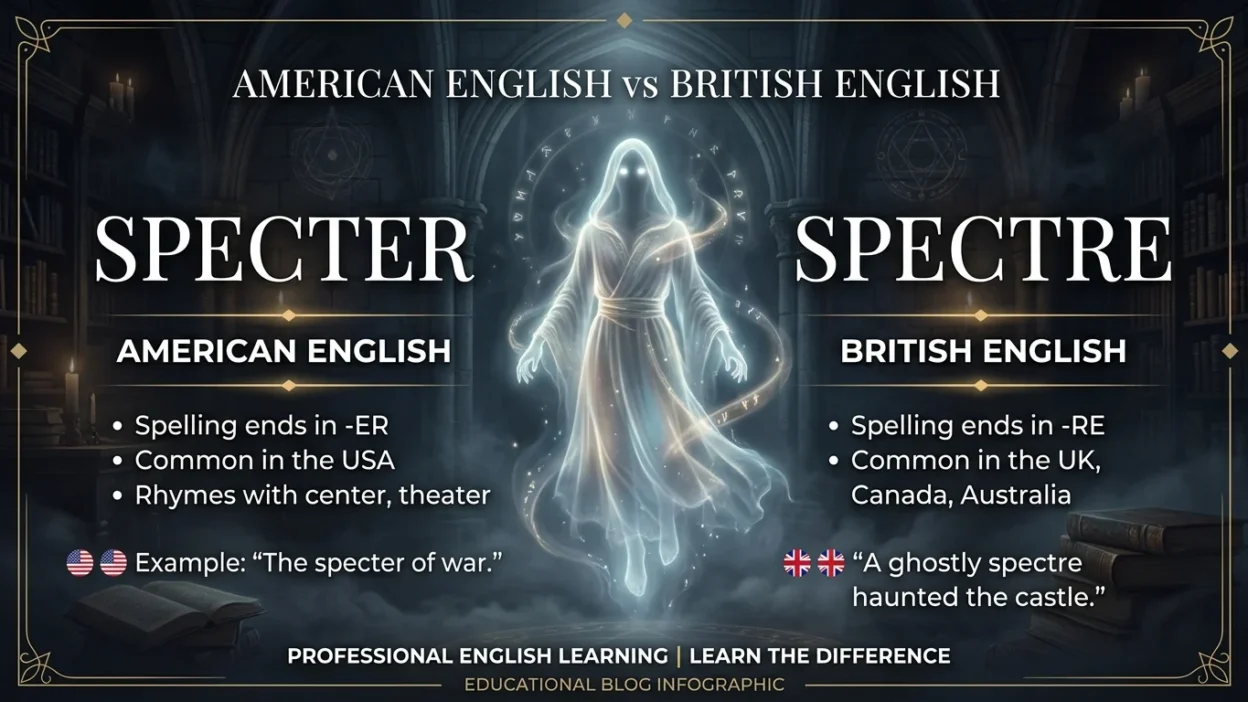
The main difference is regional spelling. Specter is the preferred spelling in American English, while spectre is the preferred spelling in British English and many other varieties influenced by British English.
The pronunciation and basic meaning remain the same. If you are writing for an American audience, choose “specter.” If you are following British English, choose “spectre.”
Quick Answer
Specter and spectre have the same meaning and pronunciation. Specter is the standard American English spelling, while spectre is the standard British English spelling. Both can mean a ghost or a threatening presence, either literally or figuratively.
Why People Confuse It
People often wonder whether “specter” and “spectre” represent different words because their spellings are different.
They do not. The difference is mainly an American and British spelling variation.
This pattern is similar to other words where American English tends to use er while British English retains re, such as:
center / centre
meter / metre
theater / theatre
In the same way:
specter = American English
spectre = British English
Specter
Specter is the standard American English spelling.
It can refer to a ghost or apparition.
A specter appeared in the old house.
It can also describe an unpleasant possibility or threat.
The specter of war worried the entire region.
In modern writing, the figurative meaning is particularly common.
For example:
The specter of unemployment continues to concern workers.
Here, “specter” does not necessarily mean an actual ghost. It refers to the frightening possibility of something happening.
Spectre
Spectre is the standard British English spelling.
It has the same meanings as “specter.”
For example:
A spectre appeared in the abandoned house.
It can also be used figuratively:
The spectre of poverty affected the community.
So, the difference between specter and spectre is not a difference in meaning. It is primarily a difference in spelling based on regional English.
Comparison Table
| Word | Main variety | Meaning | Example |
|---|---|---|---|
| Specter | American English | Ghost, apparition, or threatening presence | The specter appeared at midnight. |
| Spectre | British English | Ghost, apparition, or threatening presence | The spectre appeared at midnight. |
| Spectral | Both | Ghostly or supernatural | A spectral figure appeared. |
| Apparition | Both | A ghost or supernatural appearance | They saw an apparition. |
| Phantom | Both | Ghost or imagined presence | A phantom appeared in the story. |
When to Use Each
Use specter when following American English spelling.
The specter of recession remains a concern.
Use spectre when following British English spelling.
The spectre of recession remains a concern.
If you are writing for an international audience, either spelling may be understood. However, maintaining one spelling system throughout your article or publication makes your writing look more consistent.
Examples of Specter and Spectre
- A specter appeared in the dark hallway.
American English - A spectre appeared in the dark hallway.
British English - The specter of war frightened the population.
American English - The spectre of war frightened the population.
British English - The story describes a mysterious specter.
American English - The story describes a mysterious spectre.
British English - The specter haunted the old castle.
American English - The spectre haunted the old castle.
British English - The specter of failure made him anxious.
American English - The spectre of failure made him anxious.
British English - The novel features a terrifying specter.
American English - The novel features a terrifying spectre.
British English
Common Mistakes
1. Thinking specter and spectre have different meanings
They generally have the same meanings. The spelling is what changes.
2. Using spectre in American English writing
“Spectre” is understandable to American readers, but specter is the standard American spelling.
3. Using specter in British English writing
British English generally prefers spectre.
4. Thinking the word only means ghost
“Specter” or “spectre” can refer to an actual ghost, but it is also frequently used figuratively.
For example:
The specter of poverty continues to affect the region.
Here, the word refers to a threatening possibility rather than a supernatural being.
5. Confusing specter with spectrum
The words look somewhat similar, but they have different meanings.
A specter is a ghost or threatening presence.
A spectrum is a range of things, such as a range of colors, frequencies, or opinions.
Memory Trick
Remember:
Specter = American English
Spectre = British English
A useful way to remember the spelling is to connect spectre with other British spellings ending in re, such as “centre” and “theatre.”
The meaning stays the same, even though the spelling changes.
American vs British English
This is primarily a spelling difference between American and British English.
American English: specter
British English: spectre
For example:
American: The specter of war remains a serious concern.
British: The spectre of war remains a serious concern.
Both sentences have exactly the same meaning.
The British spelling has an older connection to French, while American English commonly uses the simplified er ending in words of this type.
Similar Words
Several words can be used instead of “specter” or “spectre,” depending on the context.
Ghost: A spirit of a dead person, especially in supernatural contexts.
Apparition: A ghostly or supernatural appearance.
Phantom: A ghost or something that seems unreal or imagined.
Wraith: A ghostly figure, often associated with death.
Haunting: Something that remains troubling or memorable.
Threat: A possible source of danger, especially when “specter” is being used figuratively.
For example, instead of:
The specter of unemployment worried workers.
You could write:
The threat of unemployment worried workers.
Final Verdict
Specter and spectre are both correct spellings of the same word.
Use specter in American English and spectre in British English. Both can describe a ghost or apparition, as well as a frightening possibility or threat.
If you are writing for an American audience, specter is the safer choice. If you are following British English, choose spectre.
FAQs
Is specter or spectre correct?
Both are correct. “Specter” is the standard American spelling, while “spectre” is the standard British spelling.
Are specter and spectre pronounced the same?
Yes. They are generally pronounced the same despite the difference in spelling.
Does specter mean ghost?
Yes. A specter can mean a ghost, apparition, or supernatural figure. It can also refer figuratively to a threatening possibility.
Is spectre British English?
Yes. “Spectre” is the standard spelling in British English.
Is specter American English?
Yes. “Specter” is the standard spelling in American English.
What is the plural of specter?
The plural is specters in American English. In British English, the plural is spectres.
Is specter a formal word?
It can be. The word is common in literary, journalistic, historical, and formal writing, particularly when used figuratively.
Conclusion
The difference between specter and spectre is simple. They are not separate words with different meanings. They are regional spellings of the same word. American English normally uses “specter,” while British English normally uses “spectre.”
Both words can describe a ghost or apparition, but they can also describe an alarming possibility or threat. Once you remember the American er and British re spelling patterns, choosing between them becomes easy.
Remember This
Specter = American English
Spectre = British English
Same word, same meaning, same pronunciation, different regional spelling.

Christopher Thomas is a passionate writer and dream researcher dedicated to exploring the meanings behind dreams. As an author at DrameyHut, he creates insightful and easy-to-understand interpretations that help readers connect with their subconscious mind. His work focuses on guiding individuals toward self-discovery, clarity, and a deeper understanding of their inner thoughts.